

What to Look for in a Roasted Coffee Shop
Last Updated: November 16, 2026
Quick Summary
A roasted coffee shop roasts its own beans and sells them by roast date, not a café that merely brews someone else's coffee. Ask when the beans were roasted and how many pounds went into the roaster that day, and treat a bag showing only a best by date as a warning.
- Small-batch roasters typically run loads measured in pounds, not truckloads, so beans move from cooling tray to bag faster.
- Roasting reduced chlorogenic acids by 50% and raised caffeine content by about 30%, per a PubMed Central study.
- Match roast to brewer: light and medium suit pour-over and drip, while medium-dark and dark hold up in espresso and moka pot.
- Store beans in an airtight container away from light and heat, and buy only what you'll drink in two to three weeks.
- Every Black Cat Coffee Co. bag is $23.99 for 12 ounces, roughly 18 to 19 cups at an 18-gram dose.
Table of Contents
- How to Judge a Roasted Coffee Shop Before You Buy
- Roast Dates, Batch Size, and the Questions That Reveal Both
- Why Freshly Roasted Coffee Beans Beat the Grocery Shelf
- What Small-Batch Coffee Roasters Do Differently
- Roast-to-Order Coffee: Convenience Without the Stale Bag
- Matching Roast Level to Your Brew Method
- How to Store Coffee Beans So Freshness Lasts
- What a Bag Costs and What You Get for It
- Ordering Your First Bag From Black Cat Coffee Co.
- Frequently Asked Questions
How to Judge a Roasted Coffee Shop Before You Buy
Sixty-six percent of Americans had coffee in the past day, more than any other beverage, including tap or bottled water, according to the 2026 National Coffee Data Trends report. That volume of daily drinking makes the roasted coffee shop you buy from a genuinely important decision. At Black Cat Coffee Co., we roast in small batches to order, so we know exactly which details separate a fresh bag from a stale one.
Below, we'll show you the five signals that matter most, plus what a bag should cost and how to store it once it lands.
The first thing to understand: a roasted coffee shop is a business that roasts its own beans and sells them by roast date, not a café that merely brews someone else's coffee. That distinction decides everything else on this page.
Roast Dates, Batch Size, and the Questions That Reveal Both
Ask two questions before you buy: when were these beans roasted, and how many pounds went into the roaster that day? A shop that prints a roast date answers the first honestly.
Batch size is the harder tell. Small-batch coffee roasters typically run loads measured in pounds, not truckloads, which means beans move from cooling tray to bag faster. The 2026 Specialty Coffee Report from the National Coffee Association, based on 1,850 adults, tracks how closely buyers watch these details.
If a bag shows only a "best by" date, treat that as a warning. Watch out: a "best by" stamp can sit a year out from roast, so you learn nothing about freshness.
Why Freshly Roasted Coffee Beans Beat the Grocery Shelf
Freshly roasted coffee beans beat grocery shelf bags because time and oxygen flatten aroma compounds, and shelf stock has usually spent weeks in transit and warehousing. Roasting also changes the bean itself: researchers reported that roasting reduced chlorogenic acids by 50% and raised caffeine content by about 30%, per the PubMed Central study on roasting and chlorogenic acids.
That chemistry happens once. What you control is how long the bag sits before you open it. For the full side-by-side, see our fresh roasted coffee vs grocery store comparison.
What Small-Batch Coffee Roasters Do Differently
Small-batch roasting means shorter runs and closer attention per batch. A roaster can adjust a profile mid-roast, pull a batch at the first sign of scorching, and cup the result before it ships.
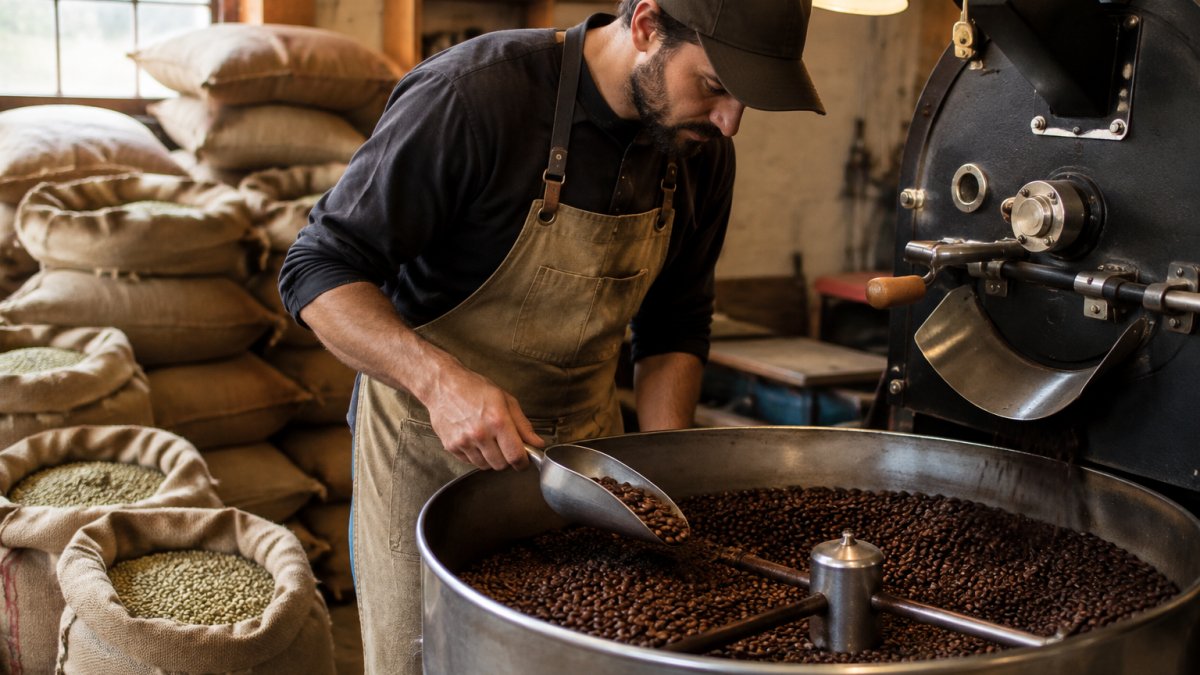
Color alone won't tell you the roast level, either. Color alone is not a reliable guide to roast degree, which is why tasting notes on the bag matter as much as the shade of the bean. Our guide to the benefits of small batch roasted coffee goes deeper.
Roast-to-Order Coffee: Convenience Without the Stale Bag
Roast-to-order coffee is roasted after you place the order, so the bag arrives days from the roaster rather than months from a warehouse. That timing is the whole point.
Convenience looks like this: order on a Sunday, drink it that week, reorder when the bag runs low. No subscription required, no guessing at turnover. If you're weighing whether the model earns its price, our guide on whether roast to order coffee is worth it walks through the math.
Matching Roast Level to Your Brew Method
Roast level is the single biggest lever you control after you buy, because it sets how soluble the bean is and therefore how forgiving it is in a given brewer. Most practitioners describe four working bands: light, medium, medium-dark, and dark. Light roasts are pulled earlier, keep more acidity and origin character, and reward precise water temperature and grind; dark roasts are pulled later, taste of cocoa, caramel, and roast, and stand up to milk and pressure. Medium sits between, which is why it is the default for most drip drinkers.
The practical rule is to match the roast to how much control your brewer gives you. Pour-over and drip give you the most control over temperature and grind, so they flatter light and medium roasts. Espresso and moka pot push water through at pressure, so medium-dark and dark roasts hold their structure and don't turn sharp. Cold brew extracts slowly and cold, so a light-medium roast with caramel and toffee notes stays sweet instead of hollow.
Here is how our five blends map to those bands, with the tasting notes printed on each bag:
| Blend | Roast Level | Tasting Notes | Best Brew Method | Why It Works There |
|---|---|---|---|---|
| Breakfast Blend | Medium | Smooth South American blend | Drip, pour-over | Balanced solubility; forgiving if your grind drifts |
| House Blend | Medium | Nutty, sweet chocolate, mild citrus | Drip, French press | Body holds up in immersion; citrus stays bright |
| Gourmet Donut Shop | Light-medium | Cocoa, caramel, toffee, mild fruit | Drip, cold brew | Sweetness survives slow cold extraction |
| Latin American Blend | Medium-dark | Nutty, mild fruit, cocoa finish | Espresso, moka pot | Enough structure for pressure without going bitter |
| 6 Bean Blend | Dark | Bold, built for pressure | Espresso | Roast-forward flavor cuts through milk |
A few concrete adjustments matter more than the bag copy. For pour-over, start with water just off a boil and a medium-fine grind, then tighten the grind if the cup tastes thin. For French press, use a coarse grind and a full four-minute steep; a medium roast like House Blend tolerates the extra contact time. For espresso, expect to dial the grind finer as beans age past the first week, because fresh beans release gas that resists water flow. For cold brew, a 1:8 coffee-to-water ratio steeped 12 to 16 hours keeps a light-medium roast from tasting watery.
Watch out: color alone won't tell you the roast level, which is why the printed tasting notes on the bag matter as much as the shade of the bean. A bean can look dark and still taste flat if it was baked rather than developed. Our guide to the benefits of small batch roasted coffee goes deeper on why batch size changes what lands in the bag.
How to Store Coffee Beans So Freshness Lasts
Store coffee beans in an airtight container, away from light and heat, and buy only what you'll drink in two to three weeks. Whole beans hold up longer than ground, so grind just before brewing.
Skip the freezer for daily-use bags; condensation does more damage than the cold helps. Our detailed walkthrough on how to store roasted coffee beans covers container types and portioning.
What a Bag Costs and What You Get for It
Every Black Cat Coffee Co. bag is $23.99 for a 12-ounce bag, roasted to order and shipped direct. To make that number comparable, here is the math most buyers skip: a 12-ounce bag is 340 grams, and at a standard 18-gram dose per brewed cup it yields roughly 18 to 19 cups. That works out to about $1.27 to $1.33 per cup before milk, filters, or equipment.
That per-cup figure is the honest way to compare a roasted coffee shop against the grocery shelf. A bag with only a "best by" date can be a year out from roast, so the lower sticker price can buy you older coffee.
What you get for $23.99: a named blend with tasting notes, and roast-to-order coffee roasted after you place the order.
Watch out: per-cup math changes fast with dose. A 22-gram espresso dose or a strong 1:15 pour-over ratio can push a 12-ounce bag toward 15 cups, so recalculate with your own recipe before comparing shops on price alone.
Ordering Your First Bag From Black Cat Coffee Co.
Start with the House Blend if you want the safest first step: medium roast, nutty and sweet chocolate notes, clean finish, $23.99. Espresso drinkers should go straight to the 6 Bean Blend; light-roast fans will prefer the Gourmet Donut Shop.
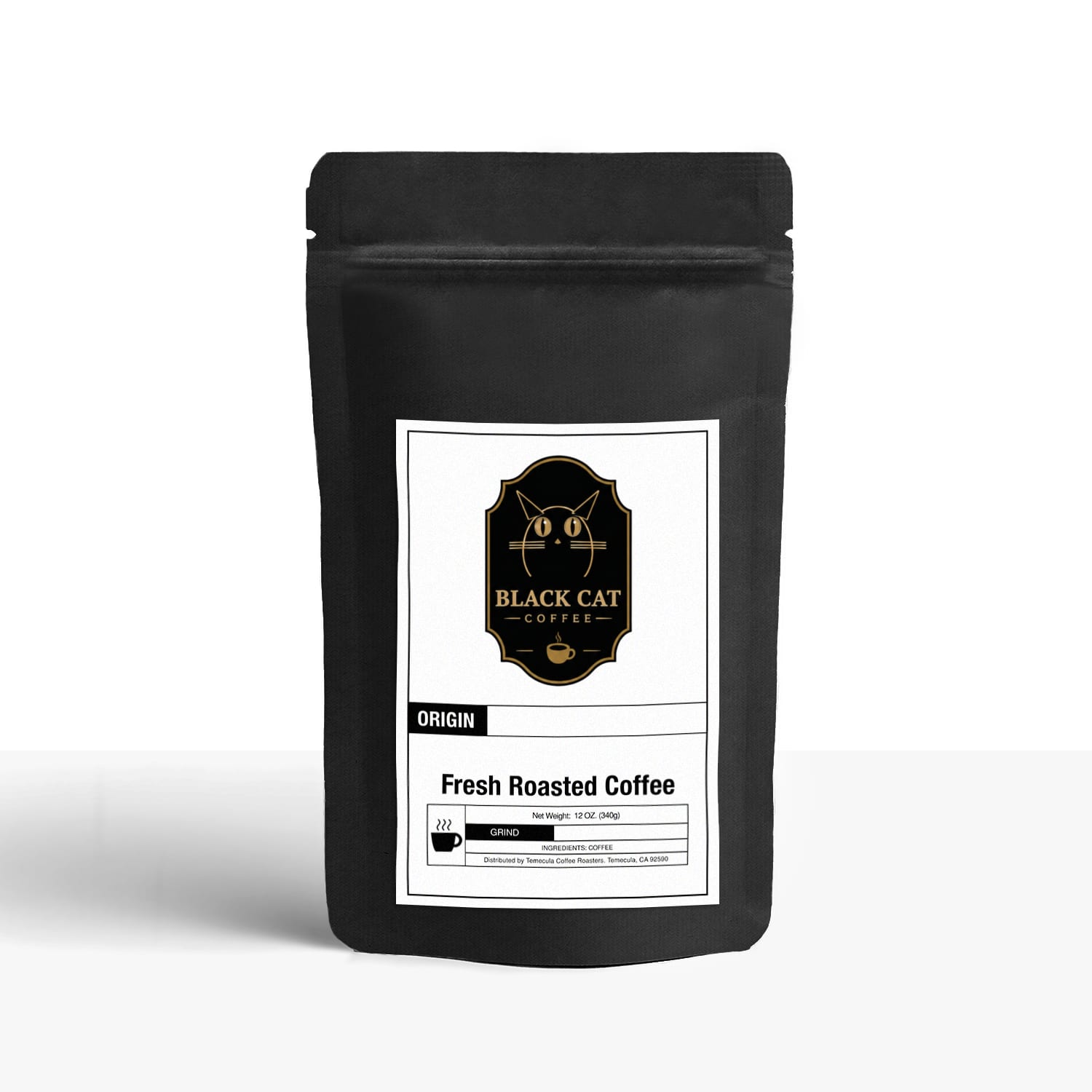
Ordering is simple, and roasting to order is designed to keep the coffee fresh when it arrives. That's the whole promise of a roasted coffee shop done properly.
The gap between fresh and shelf-stale coffee comes down to one decision: who roasts it, and when. Black Cat Coffee Co. roasts to order in small batches, ships fast, and prints the date on every bag. Get started with Black Cat Coffee Co. and taste what a genuinely fresh roast does for your morning cup.
Frequently Asked Questions
What should I look for in a roasted coffee shop?
Start with the roast date, not the best-by date. A roasted coffee shop that prints the day the beans left the roaster tells you how fresh the bag actually is. Ask how large the batches are, since small batches cool faster and roast more evenly. Check whether the shop names the roast level and tasting notes so you can match the bag to your brewer, and confirm the beans ship within days of roasting rather than sitting in a warehouse.
How long after roasting is coffee freshest?
Most roasted coffee peaks between roughly 4 and 14 days after the roast date, then fades gradually. The first 24 to 48 hours release a large amount of carbon dioxide, which can make espresso pour unevenly, so many people rest beans a few days before brewing. Buying roast-to-order coffee shortens the gap between the roaster and your kitchen, which is the simplest way to land inside that window instead of starting past it.
What does small-batch roasted coffee mean?
Small-batch roasting means the roaster works in limited quantities rather than running continuous high-volume production. Smaller batches are easier to monitor, so the roaster can adjust heat and timing to bring out specific tasting notes in each lot. It also means less roasted coffee sits in inventory. The practical result is a bag that reflects the roaster's intent for those beans, not a compromise made to keep a large production line moving.
How should freshly roasted coffee beans be stored?
Keep beans whole in an airtight, opaque container at room temperature, away from the stove, the fridge door, and direct sunlight. Grind right before brewing, because ground coffee loses aroma far faster than whole bean. Skip the freezer for daily-use bags since repeated thawing introduces moisture. Buy amounts you will finish in two to four weeks, and check the roast date on arrival so you know how much of that window is left.
Are roast-to-order coffee beans worth it?
They are worth it if freshness is the thing you notice most in a cup. Roast-to-order coffee skips the warehouse and shelf time that flattens aroma in grocery bags, which is why a bag roasted this week tastes different from one roasted months ago. The tradeoff is planning ahead for shipping. For anyone drinking coffee daily, ordering on a schedule keeps a fresh bag rotating in without much effort.
