

Benefits of Small Batch Roasted Coffee: 2026 Guide
Table of Contents
- Why Small Batch Coffee Tastes Different
- How to Buy Small Batch Coffee Beans Without Getting Burned
- What Is the Roast Date on Coffee Bags (And Why It Matters More Than 'Best By')
- How to Store Fresh Roasted Coffee So It Stays Fresh
- The Freshness Timeline: How Long Small Batch Coffee Stays Good
- Why Small Batch Roasted Coffee Costs More (And When It's Worth It)
- Conclusion
- Frequently Asked Questions
Last Updated: September 14, 2026
Why Small Batch Coffee Tastes Different
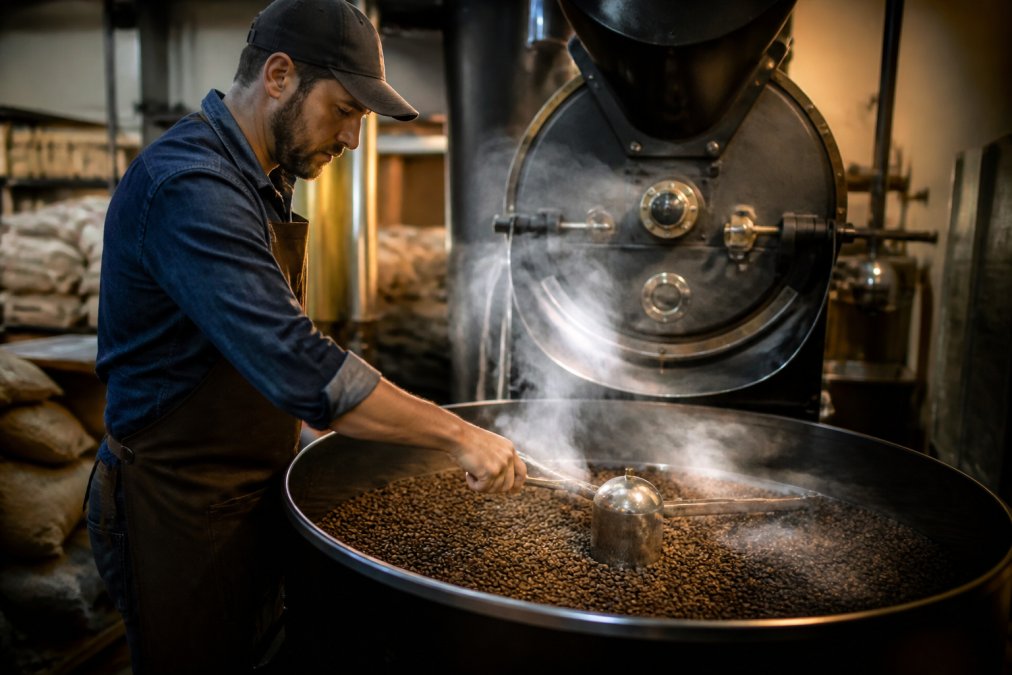
Small batch roasting produces more consistent, flavorful coffee because roasters can monitor each batch closely and adjust in real time. At Black Cat Coffee Co., we roast to order in small quantities, which means the beans in your bag were roasted days ago, not months ago. That difference shows up in the cup immediately.
Large commercial roasters prioritize volume and shelf stability. They roast dark to mask inconsistencies and ship beans that sit in warehouses for weeks before reaching a grocery shelf. Small batch roasters work differently. A batch might be 5 to 15 kilograms, small enough that the roaster can taste each one and tweak the profile.
The benefits of small batch roasted coffee start with attention. When a roaster handles fewer beans at once, defects get caught. Underdeveloped batches get flagged. The result is a cup with clearer origin character, whether that's the citrus notes in an Ethiopian single origin or the chocolate depth of a Sumatran blend.
How to Buy Small Batch Coffee Beans Without Getting Burned
To buy small batch coffee beans well, check three things before you order: the roast date, the roaster's sourcing transparency, and whether they roast to order or roast in advance. Most disappointing purchases trace back to skipping one of these checks.
What to Look for on a Roaster's Website
A trustworthy roaster's site answers basic questions without making you dig. Look for:
- Roast date printed on the bag, not just a "best by" date
- Origin details: farm name, region, altitude, and processing method
- Roast-to-order language or a stated roasting schedule
- Shipping timelines that tell you when beans ship after roasting
- Batch size or roasting capacity mentioned somewhere on the site
If a roaster can't tell you when your coffee was roasted, that's your answer. Walk away.
A common mistake is chasing the lowest price per bag. Cheap small batch coffee usually isn't small batch at all. It's mass-roasted coffee with boutique labeling.
What Is the Roast Date on Coffee Bags (And Why It Matters More Than 'Best By')
The roast date is the calendar date the beans were roasted, printed by the roaster to indicate freshness. It matters more than a "best by" date because coffee begins losing flavor within days of roasting, not months.
Best-by dates exist for inventory and legal reasons (usda.gov). They don't reflect peak flavor. A bag stamped "best by December 2026" could have been roasted in January. By the time you brew it, the oils have oxidized and the aromatics are gone.
Roast dates give you real information. If a bag says "Roasted September 8" and you're opening it on September 14, you know exactly what you're working with.
Here's the practical rule: buy from roasters who print roast dates, and treat anything older than four weeks as past its best.
How to Store Fresh Roasted Coffee So It Stays Fresh
Store fresh roasted coffee in an airtight, opaque container at room temperature, away from light, heat, and moisture (Effect of Temperature and Storage on Coffee’s Volatile Compound Profile and Sensory...). Skip the fridge. Skip the ornate glass jar on your counter. Both speed up staling.
The enemies of fresh coffee are oxygen, light, heat, and moisture, in roughly that order. Whole beans have a slight edge over ground coffee because less surface area is exposed, but both degrade on the same timeline.
The Freezer Myth and What Actually Works
Freezing coffee works, but only if you do it right. The myth is that any freezer storage preserves freshness. The reality is that repeated temperature swings and moisture exposure ruin beans faster than room-temperature storage.
If you freeze coffee:
- Use an airtight, vacuum-sealed bag or a dedicated freezer container
- Freeze whole beans, never ground
- Take out only what you'll use in a week
- Never refreeze beans after they've thawed
For most people buying a bag at a time, a sealed bag in a cool cupboard is simpler and just as effective. Freezing makes sense when you're stocking up on multiple bags or buying in bulk.
The Freshness Timeline: How Long Small Batch Coffee Stays Good
Small batch coffee hits peak flavor roughly 4 to 14 days after roasting and stays good for about four to six weeks if stored properly (Effect of green and roasted coffee storage conditions on selected characteristic quality...). After that, flavor flattens even if the coffee remains drinkable.
The timeline looks roughly like this:
| Time Since Roast | What's Happening | Best Use |
|---|---|---|
| Days 1-3 | Beans degassing heavily; flavors still developing | Wait if you can |
| Days 4-14 | Peak flavor window; aromatics at their strongest | Pour-over, espresso, drip |
| Days 15-28 | Flavor still solid but softening | Daily brewing |
| Days 29-42 | Noticeable flattening; body thins out | Cold brew, milk drinks |
| Beyond 6 weeks | Stale; muted and papery | Compost |
This is why roast-to-order matters. A bag that reaches you three days after roasting gives you nearly the full peak window. A bag that sat in a warehouse for a month starts you near the end of it.
Why Small Batch Roasted Coffee Costs More (And When It's Worth It)
Small batch coffee costs more because the entire process is less efficient. Smaller batches mean more labor per pound, more frequent roasting cycles, and higher green coffee costs when roasters buy from specific farms rather than commodity suppliers.
The price difference usually comes down to four factors:
- Green coffee sourcing: single-farm and single-origin lots cost more than commodity blends
- Batch size: roasting 10 kilograms at a time is more expensive per pound than roasting 100
- Labor: small roasters hand-check batches, cup for quality, and pack to order
- Freshness logistics: roasting to order means less inventory efficiency
Is it worth it? For anyone who drinks coffee daily and cares about how it tastes, yes. The benefits of small batch roasted coffee show up in every cup, not just the first one. You're paying for flavor that mass-market coffee can't deliver because the supply chain won't allow it.
If you're used to cheap pods or grocery-aisle bags, expect a real adjustment in both price and flavor. The first cup of a fresh single origin often surprises people who've only had commodity coffee.
Conclusion
The benefits of small batch roasted coffee come down to one thing: freshness you can taste. Roast dates, small batch sizes, and roast-to-order shipping all serve that single goal. Skip any one of them and you're back to guessing.
Black Cat Coffee Co. roasts to order from carefully sourced beans, so your bag ships days after roasting, not weeks. We offer blends, single origins, and convenient pods, all built around the same commitment to freshness. If you want coffee that actually tastes like something, the difference starts with the roast date. Get started with Black Cat Coffee Co. and taste what fresh roasting does for your daily cup.
Frequently Asked Questions
What is the difference between small batch and commercial coffee?
Small batch roasters typically roast between 5 and 30 pounds at a time, giving the roaster precise control over temperature and timing. Commercial operations roast hundreds of pounds per batch, which can lead to uneven roasting and longer storage before packaging. The result is that small batch coffee often has more consistent flavor development and reaches you closer to the roast date.
Does small batch coffee really taste better?
Small batch roasting allows for tailored roast profiles that highlight a bean's natural characteristics. Because the coffee is roasted in smaller quantities, it's easier to avoid scorching or underdevelopment. Freshness also plays a major role: coffee reaches peak flavor within days of roasting, and small batch roasters typically ship sooner, so you taste the coffee at its best.
How long does small batch coffee stay fresh?
Most small batch coffee tastes best within 2 to 4 weeks of the roast date. After that, flavors begin to fade, though the coffee remains safe to drink. Whole beans stay fresh longer than ground coffee. To maximize freshness, store beans in an airtight container away from light, heat, and moisture, and grind just before brewing.
What should I look for when I buy small batch coffee beans?
Check for a clear roast date on the bag, not just a 'best by' date. Look for the roaster's location and sourcing information, which indicates transparency. Bags with a one-way degassing valve help release carbon dioxide while keeping oxygen out. If you're buying online, choose a roaster that ships within a day or two of roasting.