

How to Store Roasted Coffee Beans for Lasting Freshness
Table of Contents
- What You'll Need to Store Roasted Coffee Beans
- The Enemies of Coffee Freshness: Light, Heat, Moisture, and Oxygen
- How Long Does Coffee Stay Fresh After Roasting?
- Best Coffee Storage Containers: Airtight, Opaque, and Valve-Equipped
- Freezing Coffee Beans: Step-by-Step Protocol to Avoid Condensation
- Signs of Stale Coffee Beans and How to Revive Them
- Step-by-Step Daily Storage Routine for Peak Flavor
- Frequently Asked Questions
Last Updated: October 2, 2026
What You'll Need to Store Roasted Coffee Beans
Learning how to store roasted coffee beans well comes down to four things: an airtight, opaque container, a cool and dark spot, the right portion size, and a plan for the freezer. This guide from Black Cat Coffee Co. walks through each one.
Coffee starts losing its best qualities the moment it leaves the roaster. Oxygen, light, heat, and moisture all speed that decline. The tools below slow it down.
Here's what you need:
- Airtight, opaque container with a tight seal
- Original bag with a one-way valve, if you keep it
- Freezer-safe bags or small jars for long-term storage
- A cool, dark cabinet away from the stove
- A marker to label roast dates
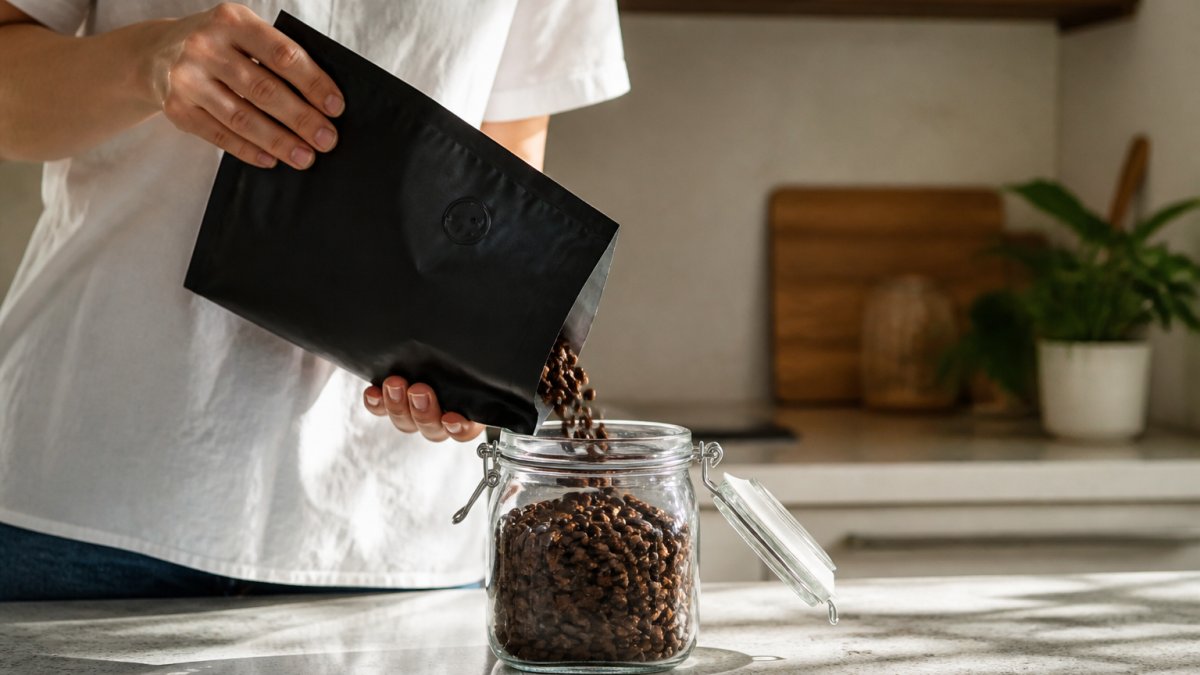
Most people already own everything on this list. The trick is using it right.
The Enemies of Coffee Freshness: Light, Heat, Moisture, and Oxygen
Four forces ruin coffee: light, heat, moisture, and oxygen. Each one attacks flavor in a different way, and together they turn a bright, sweet cup flat and dull within weeks.
Light breaks down the oils that carry aroma. That's why clear glass jars on a sunny shelf are a bad idea.
Heat speeds up every chemical reaction inside the bean. A spot above the coffee maker is the worst place you can pick.
Moisture is the quiet killer. Beans are porous, so they pull water from the air. Damp beans go stale fast and can grow mold.
Oxygen causes oxidation, the same process that browns a cut apple. It strips away the volatile compounds that make coffee taste like coffee.
A common mistake is worrying about one enemy and ignoring the rest. You need to block all four at once.
How Long Does Coffee Stay Fresh After Roasting?
Roasted coffee stays at its best for about two to four weeks after the roast date when stored in an airtight, opaque container at room temperature. After that, flavor fades steadily, though the coffee stays safe to drink much longer.
The clock starts at roasting, not at purchase. A bag that sat on a shelf for two months before you bought it is already past its peak.
A few things shift that window:
- Roast level: darker roasts tend to fade faster than lighter ones
- Grind: whole beans hold flavor far longer than ground coffee
- Storage method: a sealed, dark container adds days or weeks
So check the roast date, not the "best by" date. The roast date tells the real story.
Best Coffee Storage Containers: Airtight, Opaque, and Valve-Equipped
The best coffee storage container is airtight, opaque, and sized to hold only what you'll use in a week or two. But material matters more than most guides admit, because roasted coffee releases oils that interact with whatever surface they touch.
Here's how the main options stack up:
| Container Type | Blocks Light | Blocks Air | Oil Interaction | Best For |
|---|---|---|---|---|
| Original bag with valve | Yes (most) | Partial | Food-grade liner, low reactivity | Short-term, daily use |
| Opaque airtight canister | Yes | Yes | Depends on material | Week-to-week storage |
| Clear glass jar | No | Yes | Non-reactive, but light passes through | Only inside a dark cabinet |
| Vacuum-sealed bag | Yes | Yes | Multi-layer film, low reactivity | Long-term freezing |
Material science, briefly. Coffee oils are mildly acidic and aromatic. Over time they can migrate into porous or reactive surfaces, and those surfaces can give flavors back.
- Stainless steel: Non-porous, blocks light completely, and doesn't absorb or release odors. The trade-off is that it can feel cold to the touch and some cheaper tins have seams that leak air.
- Ceramic: Excellent light block and non-reactive glaze, but heavy and prone to chipping. Unglazed interiors can hold onto oils and stale smells.
- Glass: Chemically inert, so it never flavors the beans. Clear glass fails on light unless it's amber, frosted, or kept in a dark cabinet. Borosilicate resists thermal shock better than soda-lime if you ever chill it.
- Plastic: Convenient and cheap, but thin plastic is slightly permeable to oxygen over weeks. Thick, opaque, food-grade plastic (look for HDPE or PP) performs far better than clear takeout containers.
The one-way valve on a good coffee bag is underrated. It lets carbon dioxide escape after roasting without letting oxygen in. That's why the original bag often beats a fancy jar for the first week or two.
A common pattern among home roasters and specialty shops: keep the valve bag as the primary vessel, then drop it inside an opaque canister for the light block.
FDA food-contact material guidance
Freezing Coffee Beans: Step-by-Step Protocol to Avoid Condensation
Here's the protocol:
- Portion into single-use batches. Use about a week's worth per bag so you only thaw what you'll brew.
- Seal each batch airtight. Squeeze out air, then seal. A vacuum sealer is ideal, but a zip-top bag with the air pressed out works for short freezes.
- Label with the roast date and freeze date. Frozen coffee still ages, just slower.
- Freeze immediately. Don't leave bags on the counter first; every minute at room temperature starts the clock.
- Thaw sealed, at room temperature. Keep the bag closed until it's fully warmed, usually one to two hours for a week's batch.
- Never refreeze. Each thaw cycle adds moisture and breaks down cell structure.
- Leave the bag sealed while it thaws. Opening early is the single most common mistake.
- Thaw in the bag, not on a plate. The bag traps the cold air and lets it warm gradually.
- Wait for room temperature before opening. If the bag still feels cool, wait longer.
- Grind immediately after opening. Don't thaw, then store at room temperature for a day.
- Brew within a few days. Once thawed, the beans behave like fresh beans and start aging normally.
- Wipe the outside of the bag before opening if it has frost on it, so melting frost doesn't drip into the beans.
How long can you freeze? Whole beans hold well for one to three months in a properly sealed, vacuum-packed bag. Beyond that, they're still safe but flavor flattens. Label everything so you're not guessing.
Signs of Stale Coffee Beans and How to Revive Them
Stale coffee beans show clear signs: a flat, papery smell, dull surface, and a cup that tastes weak or cardboard-like. Fresh beans smell sweet and complex when you open the bag.
Watch for these signals:
-
No aroma when you open the container
-
Oily or dry, faded surface instead of a soft sheen
-
Flat flavor with little acidity or body
-
Weak extraction even with the same grind and ratio
-
Grind fresh right before brewing to save what aroma is left
-
Brew stronger to mask the flatness
-
Use them for cold brew, which hides some staleness
-
Save them for baking or as a fridge deodorizer
Step-by-Step Daily Storage Routine for Peak Flavor
A simple daily routine keeps coffee fresh with almost no effort. Small habits beat fancy gear every time.
Here's the routine:
- Buy in small batches. Order only what you'll drink in two to three weeks.
- Keep beans whole. Grind right before brewing.
- Store in an airtight, opaque container in a cool, dark cabinet.
- Scoop fast. Don't leave the lid open while you measure.
- Keep it away from heat. No spot above the coffee maker or stove.
- Freeze the extra. Portion and seal anything beyond two weeks.
- Track the roast date. Write it on the container.
Frequently Asked Questions
How long do roasted coffee beans stay fresh?
Roasted coffee beans stay fresh for about 2 to 4 weeks after the roast date when stored in an airtight, opaque container at room temperature. Whole beans retain flavor longer than ground coffee because less surface area is exposed to oxygen. For maximum freshness, use beans within 2 weeks of roasting. If you buy in bulk, freezing can extend shelf life to 6 months or more without significant flavor loss.
Is it okay to store coffee beans in a Ziploc bag?
Ziploc bags are not ideal for storing roasted coffee beans. They are not completely airtight, and their thin plastic allows light and oxygen to degrade the beans quickly. The beans will go stale within days. For better results, transfer beans to an opaque, airtight container with a one-way degassing valve. If you must use a bag, choose a vacuum-sealed bag and keep it in a dark, cool place.
Should I store coffee beans in the freezer or pantry?
Both can work, but the freezer is better for long-term storage. For daily use, keep a small supply in an airtight container in a cool, dark pantry and use within 2 weeks. For extended storage, freeze beans in airtight, opaque containers or vacuum-sealed bags. Always let frozen beans thaw completely before grinding to prevent condensation. Avoid repeated freeze-thaw cycles, which introduce moisture and speed up staleness.
What is the best container for storing roasted coffee?
The best container is opaque, airtight, and equipped with a one-way degassing valve. Stainless steel or ceramic canisters with silicone gaskets work well. Glass jars are acceptable if stored in a dark cabinet. Avoid clear plastic or porous materials. Vacuum-sealed bags are excellent for freezing. The key is to minimize oxygen exposure and block light, which destroys volatile compounds responsible for aroma and flavor.
Storing coffee well is really about buying fresh and protecting it from day one. Black Cat Coffee Co. roasts in small batches and ships to order, so your beans arrive near their peak instead of weeks past it. Explore our single-origin beans, bold blends, and convenient pods, all roasted to order and delivered fast. Get started with Black Cat Coffee Co. and taste the difference fresh makes in every cup.