

Light Roast vs Medium Roast Coffee Beans: Which to Buy
Last Updated: November 25, 2026
Quick Summary
Light roast vs medium roast comes down to what you want in the cup: light roast keeps more origin character and brighter acidity, while medium roast balances that with sweetness and body. Neither is better, so choose light for black pour-over and medium for espresso or milk drinks.
- Light beans look dry and matte; medium beans darken and may show faint surface oils.
- Per brewed serving, a 20-gram dose of light and medium roast lands within a few milligrams of caffeine.
- For light roasts, start at the hotter end of the temperature range and the finer end of the grind.
- Sour, thin coffee means under-extraction: grind finer, raise temperature 2-3°F, or extend brew time.
- Store whole beans in an airtight, opaque container and buy amounts you finish within a few weeks.
Table of Contents
- Light Roast vs Medium Roast at a Glance
- What Roast Level Actually Means (and Where Labels Fail)
- Flavor, Acidity, and Body: How the Cup Profile Changes
- The Caffeine Difference Between Light and Medium Roast Coffee
- How to Brew Light Roast Coffee (and When Medium Wins)
- How to Store Fresh Coffee Beans So Roast Character Survives
- How to Choose: Matching Roast to Your Equipment and Drink
- Taste Both Side by Side Before You Commit to a Bag
- Frequently Asked Questions
Light Roast vs Medium Roast at a Glance
The short answer: light roast keeps more of the bean's origin character, medium roast balances that character with sweetness and body. Black Cat Coffee Co. roasts to order, and the light roast vs medium roast coffee beans question comes down to what you want in the cup.
Neither is "better." They are different tools for different drinkers and different brewing methods. Below, we break down flavor, acidity, body, and caffeine so you can pick with confidence.
The Comparison Table: Flavor, Acidity, Body, and Caffeine
| Trait | Light Roast | Medium Roast |
|---|---|---|
| Flavor focus | Origin character, fruit, florals | Sweetness, caramel, cocoa |
| Acidity | Higher, brighter | Moderate, rounded |
| Body | Lighter, tea-like | Fuller, silkier |
| Surface oils | Little to none | Some begin to appear |
| Bean color | Light brown, dry | Medium brown |
| Caffeine | Similar, slightly higher by weight | Similar, slightly lower by weight |
| Best brewing | Pour-over, drip | Espresso, French press, drip |
What Roast Level Actually Means (and Where Labels Fail)
Roast level describes how far a coffee bean is taken through the roasting process, measured largely by time and temperature inside the roaster. The longer and hotter the roast, the darker the bean.
Here is the catch most guides skip: roast labels are not standardized. A Home-Barista forum discussion on roast labeling inconsistency reports that coffees one roaster calls light may read as medium or darker on a specialty scale. Treat the label as a starting point, not a guarantee.
Bean Color, Surface Oils, and First Crack
Roasters use sensory and visual cues to judge development. First crack is the audible pop when beans expand and moisture escapes, marking the start of meaningful roast development. Light roasts are pulled soon after first crack. Medium roasts continue further.
You can spot the difference at home. Light beans look dry and matte with a light brown color. Medium beans darken and may show faint surface oils as natural coffee oils migrate outward.
Flavor, Acidity, and Body: How the Cup Profile Changes
Flavor shifts predictably as roast deepens. Light roasts preserve the bean's acids and aromatic compounds, which read as brightness, fruit, and floral notes. Medium roasts develop sugars through caramelization, adding sweetness and a rounder finish.
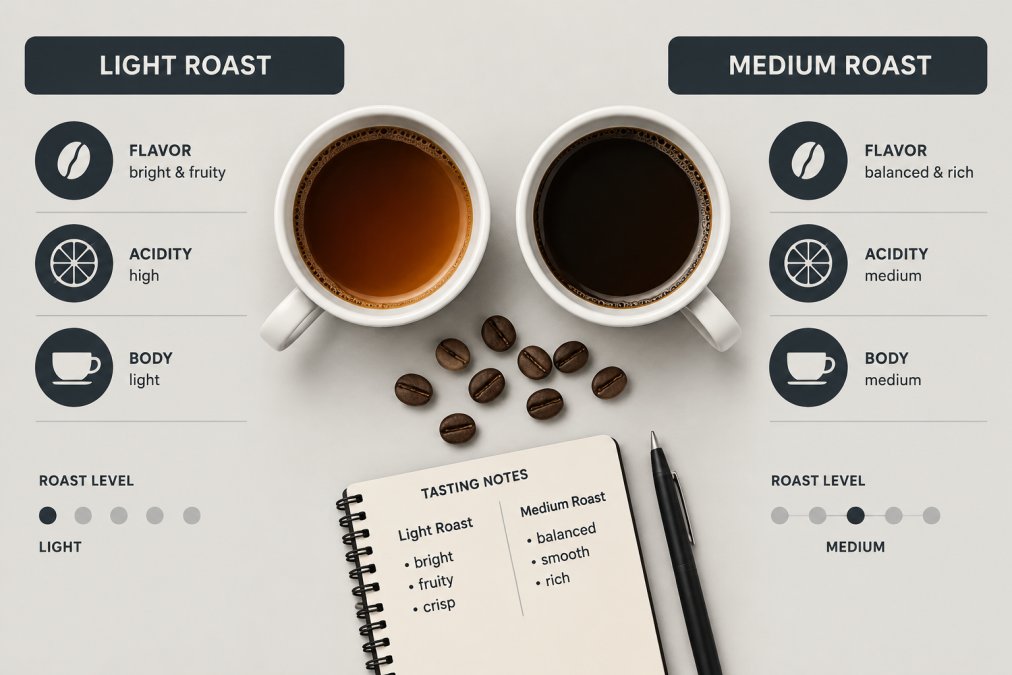
Acidity is where drinkers often have strong feelings. Light roasts carry more perceived brightness, which some people love and others find sharp. If acidity is a concern for you, our guide on why specialty coffee is less acidic explains what drives those perceptions.
Origin Flavors vs Roast-Developed Flavors
Every cup is a tug-of-war between two flavor sources. Origin flavors come from the bean itself: the variety, soil, altitude, and processing. Roast-developed flavors come from the roast: caramel, cocoa, toast, and smoke.
Light roasts let origin flavors lead. A washed Ethiopian coffee might taste of jasmine and citrus. Medium roasts let roast-developed sweetness share the stage. Neither approach is more "correct"; they simply highlight different things.
The Caffeine Difference Between Light and Medium Roast Coffee
Most comparisons get this wrong in one of two ways: they claim light roast is dramatically higher in caffeine, or they wave the question away as meaningless. The accurate answer sits between those poles and depends on whether you are measuring per bean, per scoop, or per brewed serving.
Start with the bean. Caffeine content is established by the coffee plant, not the roaster.
That mass loss drives the practical comparisons:
- Per bean: A single light-roast bean and a single medium-roast bean from the same green lot start with essentially the same caffeine. The medium bean may weigh slightly less after roasting, so per-bean caffeine is close to equal, with light roast marginally ahead by weight.
- Per scoop or volume: This is where the gap widens. Because darker beans are less dense, a scoop of medium roast holds fewer beans by mass than the same scoop of light roast. If you dose by volume, a light roast can deliver somewhat more caffeine per scoop. A common pattern is a difference in the low single-digit percentage range, not the dramatic split some guides imply.
- Per brewed serving: Dose and brewing method dominate. A 20-gram dose of light roast and a 20-gram dose of medium roast from the same origin land within a few milligrams of each other. Change the dose to 18 grams versus 22 grams and you have moved caffeine far more than any roast-level effect.
Solar Roast on how bean density and mass loss vary with roast level notes the same mass-loss mechanism: darker beans lose more mass, so volume-based dosing skews the comparison.
Brewing method matters just as much.
Watch out: caffeine content varies by coffee species and variety before roast level ever enters the picture.
The practical takeaway: pick your roast for flavor, not as a caffeine strategy. Our article on whether roast date changes caffeine content digs into how freshness interacts with these variables.
How to Brew Light Roast Coffee (and When Medium Wins)
Light roasts are generally denser than medium roasts and can require more care to extract fully. Medium roasts are generally more forgiving of grind and temperature variation. The recipes below give you a starting point for each, plus the adjustments that fix the two most common failures: sour, thin cups and bitter, drying ones.
Starting Recipes by Brewing Method
| Method | Grind Size | Water Temp | Ratio (coffee:water) | Target Brew Time |
|---|---|---|---|---|
| Pour-over (cone) | Medium-fine, like table salt | 200-205°F | 1:16 | 2:30-3:30 |
| Drip | Medium, like coarse sand | 195-205°F | 1:17 | 4-6 minutes |
| French press | Coarse, like sea salt | 195-200°F | 1:15 | 4 minutes steep |
| Espresso | Fine, like powdered sugar | 200-205°F | 1:2 | 25-30 seconds |
| Cold brew | Coarse | Cold, 60-70°F | 1:8 concentrate | 12-18 hours |
For light roasts, start at the hotter end of the range and the finer end of the grind. For medium roasts, start in the middle and adjust from there. These are starting points, not laws; your grinder, water, and basket will shift the sweet spot.
Fixing Sour and Bitter Cups
Sour, thin, or salty-tasting coffee usually means under-extraction. The fix is to extract more: grind finer, raise water temperature by 2-3°F, extend brew time, or increase agitation.
Bitter, drying, or ashy coffee usually means over-extraction or too hot a brew. The fix is to extract less: grind coarser, lower water temperature, shorten brew time, or reduce agitation.
Watch out: light roasts can taste sour even when properly extracted if the roast is very fresh.
When Medium Wins
Medium roasts are often considered an easier choice for espresso and milk drinks because of their developed sugars and fuller body. They are also more forgiving in drip machines and French presses, where temperature control is limited.
Light roasts reward attention. Matching beans to your brewer matters as much as roast level, and our guide on which coffee beans are best for your brew method walks through that pairing in detail.
How to Store Fresh Coffee Beans So Roast Character Survives
Freshness protects everything you just paid for. Store whole beans in an airtight, opaque container away from light, heat, and moisture. Grind just before brewing. Buy in amounts you will finish within a few weeks of the roast date.
Roast character fades fastest in light roasts, where delicate origin aromatics are the whole point. Medium roasts hold their sweetness a bit longer but still decline. For a deeper walkthrough, read our guide on how to store roasted coffee beans for lasting freshness.
How to Choose: Matching Roast to Your Equipment and Drink
Choose by drink first, equipment second. If you drink black coffee and want to taste origin, go light. If you add milk, pull espresso, or want a comforting everyday cup, medium is the safer bet.
- Pour-over or drip, black: light roast, medium-fine grind
- Espresso or milk drinks: medium roast for sweetness and body
- French press: medium roast, coarse grind
- Cold brew: medium roast holds up to long extraction
Light roast pros: vivid origin flavor, bright acidity, complex aroma. Light roast cons: less forgiving to brew, can taste sour if under-extracted. Medium roast pros: balanced sweetness, easy to brew, versatile. Medium roast cons: can mute delicate origin notes.
Taste Both Side by Side Before You Commit to a Bag
The fastest way to answer light roast vs medium roast coffee beans for yourself is a side-by-side tasting. Brew both roasts the same way, same dose, same grind, and taste them back to back. Note aroma, first sip, acidity, and finish.
Black Cat Coffee Co. roasts to order, so coffee reaches you fresh. Start with our Ethiopia Natural, a medium-light single origin with milk chocolate, fruity, and caramel notes at $23.99, or try our single origin sample pack to compare several coffees before committing to a full bag.
The gap between a good cup and a great one often comes down to matching roast to how you actually brew and drink.
Frequently Asked Questions
Does light roast coffee have more caffeine than medium roast?
Not in any reliable, measurable way per scoop. Light roast beans are denser because they lose less mass during roasting, while medium roast beans expand and weigh less per bean. If you scoop by volume, the denser light roast may deliver slightly more coffee mass and therefore slightly more caffeine; if you weigh your dose, the gap mostly disappears. Bean density and mass loss shift with roast level, so treat caffeine claims tied to roast color as marketing shorthand rather than a measured fact. Your dose and brew strength matter far more.
Which is smoother, light roast or medium roast coffee?
Medium roast usually reads as smoother to most drinkers. As roasting continues, acidity drops and body builds, so medium roasts taste rounder and less sharp on the palate. Light roasts keep more brightness and can come across as tart or tea-like, especially if under-extracted. That said, smoothness is a brewing variable too: a light roast brewed with hotter water and a finer grind loses much of its edge. If smoothness is your priority, start with a medium roast and adjust the brew before blaming the bean.
Which roast is better for espresso, light or medium?
Medium roast is the easier starting point for espresso. It extracts more forgivingly, resists channeling, and produces the heavier body and sweetness most espresso drinkers expect. Light roasts can make excellent espresso with bright fruit and floral notes, but they are denser and harder to extract evenly, so they usually need a finer grind, a longer shot, and higher water temperature. A sweet-leaning light blend can work well for espresso if you are willing to dial it in; otherwise, medium keeps the process simple.
How should I store roasted coffee beans to keep them fresh?
Keep whole beans in an airtight, opaque container at room temperature, away from light, heat, and moisture. Buy in amounts you will finish within a few weeks of the roast date, and grind right before brewing. Skip the fridge: it exposes beans to moisture and odors every time you open the door. The freezer works for longer storage if you seal beans in an airtight bag and let them come to room temperature before grinding, but only for beans you will not touch for a while. Freshness fades fastest in ground coffee.
Which roast is best for highlighting a coffee bean's origin flavors?
Light roasts preserve more origin character. Because less heat has altered the bean, regional and varietal traits like floral notes, citrus, stone fruit, and tea-like acidity come through more clearly. Medium roasts still show origin, but caramelization and Maillard development layer in cocoa, caramel, and toffee notes that can mask delicate flavors. If you want to taste the difference between a Sidama natural and a Mbeya washed coffee, brew them light. If you want a dependable everyday cup, medium is the safer choice.
