

Why Specialty Coffee Is Less Acidic: A Complete Guide
Table of Contents
- What Makes Coffee Acidic?
- How Specialty Coffee Production Reduces Acidity
- Dark Roast vs. Light Roast Acidity: What Changes in the Roaster
- Best Coffee Beans for Sensitive Stomachs
- How to Reduce Coffee Acidity at Home
- Why Water Chemistry Matters for Acidity
- Conclusion
- Frequently Asked Questions
Last Updated: September 16, 2026
What Makes Coffee Acidic?
Coffee acidity comes from organic acids that develop in the bean itself and shift during roasting. Chlorogenic acid, citric acid, malic acid, and quinic acid are the main players, and their levels depend on origin, processing, and roast profile.
That is the core reason why specialty coffee is less acidic: careful sourcing and lighter-touch production produce beans with a smoother acid profile than mass-market commodity coffee. This guide from Black Cat Coffee Co. breaks down the chemistry, the farming decisions, and the brewing methods that change what you actually taste and feel.
Coffee acidity is the concentration and balance of naturally occurring organic acids in a brewed cup, measured partly by pH and partly by how those acids register on your palate. A low pH means more acid present; a bright, sharp taste means the acids are more perceptible.
Perceived Acidity vs. pH Level
These are two different measurements, and confusing them is the most common mistake in coffee writing.
pH is a lab number. Perceived acidity is what your tongue reports. A coffee can sit at a moderate pH and still taste sharply acidic, because sourness depends on which acids are present, how they interact with sweetness and bitterness, and how hot the brew is.
- pH level: total acid concentration, measured on a 0-14 scale
- Perceived acidity: the sensory experience of brightness, tang, or bite
- Mouthfeel: body and texture, which can mask or amplify perceived acidity
- Bitterness: often confused with acidity, but a separate sensation from caffeine and roast compounds
Specialty roasters manage perceived acidity deliberately. Commodity coffee is often roasted to a uniform dark profile that flattens everything, acidity included.
How Specialty Coffee Production Reduces Acidity
Production decisions start on the farm. Altitude, variety, and processing method all shape the final acid content before a bean ever reaches a roaster.
Bean Selection and Altitude
Higher-altitude farms produce denser beans. Dense beans develop more sugars and complex acids slowly, which typically yields a more balanced cup rather than a harsh one.
Arabica versus robusta matters here. Arabica generally carries lower caffeine and a more nuanced acid profile; robusta tends to taste harsher and more bitter. Specialty coffee is almost always arabica, often single-origin, which gives roasters more control over the final profile.
Bean density also affects how evenly a bean roasts. Uneven roasting leaves some acids underdeveloped and others scorched, which is exactly the inconsistency specialty sourcing tries to eliminate.
Processing Methods: Washed vs. Natural
The processing method decides how much fruit stays on the bean during drying, and that changes acid development.
- Washed process: fruit removed before drying. Produces cleaner, brighter cups with more defined citric and malic acid notes.
- Natural process: fruit dried onto the bean. Produces heavier body, more fermented fruit character, and often lower perceived sharpness.
- Honey process: partial fruit retention, landing between the two.
For anyone with gastrointestinal sensitivity, natural and honey-processed coffees often feel gentler. The trade-off is that they can taste sweeter and less crisp, which some drinkers dislike.
Dark Roast vs. Light Roast Acidity: What Changes in the Roaster
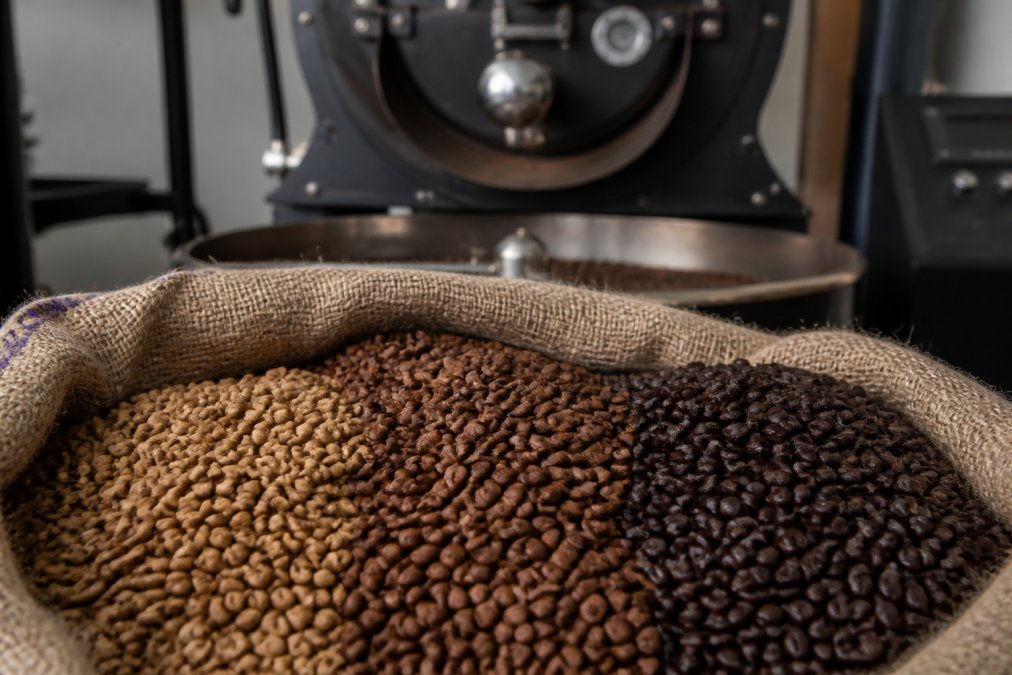
Dark roast coffee is generally less acidic than light roast, but the reason is more specific than "heat destroys acid." Different acids degrade at different rates and temperatures, and one of them actually increases as roasting progresses. Understanding that split is what separates a useful answer from a slogan.
The main acids in green coffee behave like this during a roast:
- Chlorogenic acid (CGA): the most abundant organic acid in green coffee, and the one most responsible for the sharp, astringent bite people associate with acidity. CGA degrades steadily as roast time and temperature climb, so a dark roast can retain a fraction of the CGA a light roast holds.
- Quinic acid: CGA does not simply disappear, it breaks down into quinic acid and caffeic acid. Quinic acid tastes bitter and sour rather than bright, which is why very dark roasts can read as harsh even though their total acid content is lower.
- Citric and malic acid: the acids behind the fruity, tea-like brightness in light roasts. They are more heat-stable than CGA but still decline over a long roast, and they fade faster than the bitterness compounds that develop in the same window.
- Acetic acid: associated with fermented, winey notes. It rises early in the roast and then volatilizes off, so it is highest in light-to-medium profiles and largely gone by the time a bean reaches a dark roast.
The practical result is a trade-off, not a free lunch. A darker roast lowers the acids that taste sharp, but it also burns off the delicate floral and fruity notes that make specialty coffee worth buying. You gain comfort and lose complexity.
| Roast Level | Dominant Acid Behavior | Flavor Character | Best For |
|---|---|---|---|
| Light roast | High CGA, high citric/malic, high acetic | Bright, fruity, tea-like | Pour-over, clarity seekers |
| Medium roast | CGA declining, quinic rising, fruit acids softening | Balanced, caramel, nutty | Most brewing methods |
| Dark roast | Low CGA, high quinic, fruit acids mostly gone | Bold, smoky, bittersweet | Sensitive stomachs, espresso |
One nuance most guides skip: the drop in perceived acidity between a light and a dark roast is not linear. Most of the CGA loss happens in the first few minutes of first crack and the development phase after it. Two roasts that look similar in color can differ meaningfully in acid profile if one was dropped right at first crack and the other was developed for another minute or two. That is why roast level alone is an imperfect predictor, the roast curve matters as much as the final shade.
Best Coffee Beans for Sensitive Stomachs
The best coffee beans for sensitive stomachs are low-acid varieties: dark-roasted arabica, natural or honey-processed beans, and single-origin coffees from high-altitude farms.
Stomach irritation from coffee usually traces to three things: acid content, caffeine, and the compounds that stimulate gastric acid production.
- Dark-roasted arabica: lower chlorogenic acid, gentler on the stomach
- Natural process beans: heavier body, less perceived sharpness
- Low-caffeine varieties: less stimulation of gastric acid
- Cold brew concentrate: lower measured acidity than hot-brewed coffee
How to Reduce Coffee Acidity at Home
You can lower the acidity of any cup at home through brewing choices alone. Temperature, grind size, brew time, and method all shift how much acid ends up in your mug.
Brewing Temperature and Grind Size
Lower brewing temperatures extract fewer acids. Most drip machines run hot, which pulls more acid into the cup. Manual methods give you control.
- Brewing temperature: aim lower than a rolling boil; water just off the boil extracts fewer harsh acids
- Grind size: coarser for less acid, finer for more brightness
- Brew time: shorter contact time means less acid extraction
- Ratio: more water per gram of coffee dilutes acid concentration
Cold Brew vs. Hot Brew Extraction
Cold brew is measurably less acidic than hot-brewed coffee. Cold water extracts fewer of the acids that heat pulls out quickly, and the long steep time favors sweetness and body over brightness.
Why Water Chemistry Matters for Acidity
Your water is roughly 98% of the cup, and its mineral content changes how acids taste and extract. This is the variable almost no home brewer checks.
Conclusion
The gap between a harsh cup and a smooth one usually comes down to sourcing, roast level, and brewing choices, not luck. Understanding why specialty coffee is less acidic gives you the levers to pull when your stomach or your palate complains.
Frequently Asked Questions
Which brand of coffee is the least acidic?
Specialty coffee brands that prioritize lighter roasts, single-origin beans, and washed processing tend to produce less acidic cups. Look for beans grown at high altitudes, as these develop greater density and lower perceived acidity. Brands that roast to order also offer maximum freshness. Black Cat Coffee Co. offers small-batch, roasted-to-order options that fit this profile.
Does roast level affect the acidity of coffee?
Yes, significantly. Dark roasts undergo longer roasting, which degrades chlorogenic acid and other organic acids. This results in lower perceived acidity and a smoother mouthfeel. Light roasts retain more acids, giving them brighter, fruitier notes. If you are sensitive to acidity, a dark roast is often the better choice, though it may taste more bitter.
How does altitude impact the acidity of specialty coffee beans?
Higher altitudes produce denser beans with more complex sugars and acids. While this can mean higher perceived acidity, the acids are often balanced by sweetness and body. Specialty coffee from high-altitude farms is prized for this complexity. The key is that the acidity is pleasant, not sharp, and often easier on the stomach than low-altitude, commodity beans.
What can I put in my coffee to make it less acidic?
Adding a pinch of salt or a splash of milk can neutralize some acids. Calcium in milk binds to acids, reducing stomach irritation. You can also try cold brew, which extracts fewer acids due to lower brewing temperatures. For a dairy-free option, oat milk or almond milk works similarly. Avoid adding sugar, as it does not reduce acidity and may worsen reflux.