

Small Batch Coffee Roasters: 9 Local Favorites
Table of Contents
- What Makes Small Batch Coffee Roasters Different
- Quick Comparison: Small Batch Roasters by Specialty
- Black Cat Coffee Co.: Roasted-to-Order Specialty Blends and Single Origins
- Enderly Coffee Co.: Community-Focused Neighborhood Roaster
- HEX Coffee Roasters: Precision Small-Batch Specialty Roasting
- Fresh Roasted Coffee Beans: Why Roast Date Matters
- Coffee Subscription Services: Convenient Delivery of Artisan Roasts
- How to Brew Small Batch Coffee for Maximum Flavor
- Frequently Asked Questions
Last Updated: September 23, 2026
What Makes Small Batch Coffee Roasters Different
Small batch coffee roasters distinguish themselves through precision, freshness, and direct control. Working with smaller quantities allows them to dial in exact roast profiles and catch subtle flavor variations that mass production misses.
Small batch roasters roast to order, meaning your beans are typically roasted within days of shipping. Coffee that sits on shelves for weeks loses aromatic compounds and develops stale flavors; fresh-roasted beans deliver a richer, more complex cup (Effect of Temperature and Storage on Coffee’s Volatile Compound Profile and Sensory...).
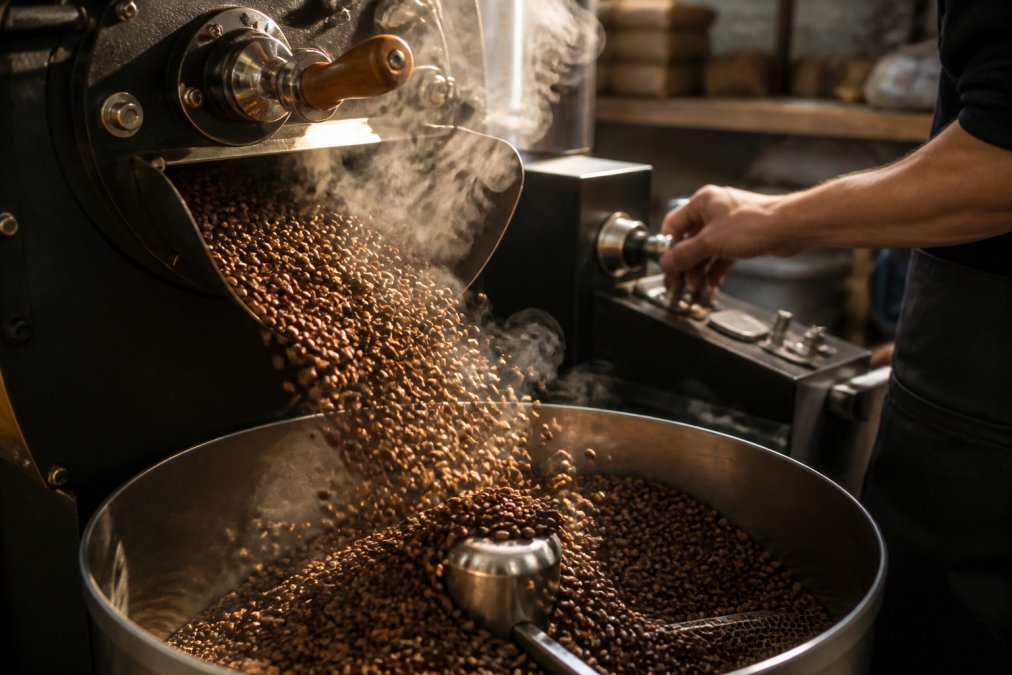
Small batch roasters maintain relationships with specific farms and experiment with roast times, temperatures, and cooling methods to highlight each origin's unique characteristics, floral and berry notes in Ethiopian beans, chocolate and nuts in Brazilian roasts. This intentionality separates craft roasting from commodity coffee.
Black Cat Coffee Co. embodies this philosophy through roasted-to-order specialty blends and single origins sourced from trusted farms worldwide, ensuring maximum flavor and aroma reach your cup.
Quick Comparison: Small Batch Roasters by Specialty
| Roaster | Specialty | Best For | Key Strength |
|---|---|---|---|
| Black Cat Coffee Co. | Roasted-to-order blends and single origins | Buyers prioritizing maximum freshness | Fast, reliable delivery with wide variety |
| Enderly Coffee Co. | Community-focused neighborhood roasting | Local residents seeking social connection | Strong local reputation and frequent promotions |
| HEX Coffee Roasters | Precision small-batch specialty roasting | Coffee enthusiasts seeking complex profiles | Consistent quality and single-origin transparency |
| Pure Intentions Coffee | Fresh, locally roasted beans | Home brewers valuing freshness | Centralized local facility with direct sales |
| VAROSH Coffee Roasters | 100% Arabica global single origins | Customers seeking variety and origin stories | Diverse bean selection and roasting support |
| Immigrant Culture | Hand-selected single-origin artisan roasting | Connoisseurs interested in bean provenance | Ethical sourcing and attention to detail |
| The Giddy Goat Coffee Roasters | In-house roasting with cafe experience | Those who value community atmosphere | Fresh on-site roasting and social engagement |
| Central Coffee Co. | Consistent small-batch standards | Coffee drinkers seeking reliability | Established brand with multiple locations |
| Summit Coffee Co. | Sustainable small-batch with subscription | Customers wanting ethical sourcing and convenience | Strong sustainability commitment and subscription model |
| Not Just Coffee | High-quality small-batch with expert prep | Coffee lovers prioritizing preparation quality | Expert barista training and curation |
Black Cat Coffee Co.: Roasted-to-Order Specialty Blends and Single Origins
Black Cat Coffee Co. solves the freshness problem through a roasted-to-order model: beans are roasted only after your order arrives, capturing natural flavor and aroma that gets lost in traditional supply chains.
Their range spans bold blends for espresso and milk drinks, delicate single origins for pour-over brewing, and coffee pods for convenience.
They combine careful sourcing from trusted farms with straightforward ordering, no complicated subscription tiers or minimum purchase requirements.
Enderly Coffee Co.: Community-Focused Neighborhood Roaster
The online store makes their beans accessible beyond foot traffic.
HEX Coffee Roasters: Precision Small-Batch Specialty Roasting
The tradeoff is premium pricing. HEX positions itself at the higher end of the small batch roaster spectrum, reflecting their quality control standards and sourcing practices. This works well for enthusiasts; it's less suitable for price-conscious buyers.
Fresh Roasted Coffee Beans: Why Roast Date Matters
Roast date is the single most important variable in coffee freshness. Coffee degrades immediately after roasting as oils oxidize and aromatic compounds escape; within two weeks most aromatic complexity fades, and after a month coffee tastes noticeably stale.
Roast-to-order models ensure beans are roasted days before arrival, not months, delivering brighter acidity, cleaner flavor, and more pronounced origin characteristics.
Conventional retail coffee typically spends weeks in distribution; by the time you brew it, the roast date is often 4-8 weeks old and has lost the vibrancy that makes specialty coffee worth seeking.
Freshness + Transparency = Real Quality
Small batch roasters differentiate themselves by publishing farm or cooperative source alongside roast date, revealing whether beans are direct-trade, fair-trade certified, or from long-term farm relationships.
A roast date paired with "Direct-trade Ethiopian Yirgacheffe from Gedeo Zone cooperative" signals two commitments: fresh beans and fair farmer compensation.
Ask roasters about their sourcing model.
For home brewers, checking the roast date should be your first evaluation criterion, but your second should be sourcing transparency. A freshly roasted bean from a named, ethically sourced farm outperforms a stale premium bean from an opaque supply chain, and it aligns your purchase with farming practices you can feel good about.
Coffee Subscription Services: Convenient Delivery of Artisan Roasts
Coffee subscriptions automate delivery on a schedule you set, with flexibility to adjust frequency, pause, or skip months. This appeals to busy professionals who want premium beans without manual ordering friction.
Summit Coffee Co. exemplifies the subscription model with sustainable small-batch roasting.
Subscriptions can limit variety: some lock you into preset rotations, constraining experimentation with different origins and roast profiles.
Black Cat Coffee Co. offers the flexibility to order what you want when you want it, combining the freshness advantage of roasted-to-order with the choice to avoid subscription commitment if that doesn't fit your routine.
How to Brew Small Batch Coffee for Maximum Flavor
Brewing method matters as much as bean quality. Small batch coffee deserves brewing equipment that extracts its complexity rather than destroying it through poor technique or inadequate equipment. But the real leverage comes from matching your brewing method to the roast profile and origin.
Pour-Over Brewing: Best for Single-Origin Clarity
Pour-over brewing (using Chemex, Hario V60, or Melitta drippers) highlights single-origin beans beautifully. The slower extraction and paper filters produce clean cups where origin characteristics shine. This method is ideal for light-to-medium roasts where you want to taste the farm's terroir, floral notes in an Ethiopian, citrus in a Kenyan, or berry brightness in a Colombian.
Technical parameters: Water temperature should be 195-205°F; use a gooseneck kettle for control. Grind size should be medium-fine, and brew time typically runs 3-4 minutes depending on your specific dripper. Start with a 1:16 coffee-to-water ratio (e.g., 25 grams of coffee to 400 grams of water) and adjust based on taste. If the cup tastes sour or thin, your water may be too cool or your grind too coarse; if it tastes bitter or flat, your water may be too hot or your grind too fine.
When ordering from roasters, ask which of their single origins they recommend for pour-over.
French Press: Best for Darker Roasts and Body
French press brewing works well for darker roasts and blends, though the metal filter allows more oils through, producing a heavier body and richer mouthfeel. Use a coarser grind to avoid over-extraction, and limit steep time to 4 minutes before plunging.
Espresso Machines: Best for Precision and Intensity
Matching Roast Level to Brewing Method
The Equipment Hierarchy
Frequently Asked Questions
What makes small batch coffee different from mass-produced coffee?
Small batch coffee roasters control every step of the roasting process, adjusting heat and timing to highlight the unique characteristics of each bean origin. Mass-produced coffee is roasted in large volumes on standardized schedules, which can result in uneven roasts and loss of nuanced flavors. Small batch roasters also prioritize freshness, often roasting to order so beans reach you at peak flavor. The direct relationship between roaster and farmer also ensures higher bean quality from the start.
Are there local coffee roasters that offer subscription services?
Yes. Several small batch roasters in the area, including Summit Coffee Co., offer subscription-based delivery models that provide fresh roasted beans on a regular schedule. Subscription services typically offer flexibility to customize roast profiles, adjust delivery frequency, and sometimes include exclusive single-origin releases.
How do I choose the best coffee beans for my brewing method?
Match your beans to your brewing equipment. Light roasts work well with pour-overs and Aeropress because they highlight the bean's origin characteristics. Medium roasts suit drip coffee makers and French presses, offering balanced body and acidity. Dark roasts are ideal for espresso and Moka pots, where their bold, full body stands up to pressure and heat. Ask your roaster about their cupping notes and roast profile, they can recommend specific beans based on your brewing method and flavor preferences.
What are the benefits of buying roasted-to-order coffee?
Roasted-to-order coffee arrives at peak freshness, typically within days of roasting rather than weeks or months after roasting. This preserves the bean's full flavor complexity and aroma. You also avoid stale coffee that has lost its volatile aromatics. Roasters can customize your order based on current inventory and seasonal single-origins, and you get direct feedback on roast date and origin transparency. For serious coffee drinkers, the taste difference between coffee roasted last week and coffee roasted last month is significant.
Where can I find single-origin coffee beans from local roasters?
Most small batch roasters maintain online stores with current single-origin offerings. Check each roaster's website for current availability, origin details, and tasting notes.