

Shortds vs Coffee by the Roast: 2026 Review Guide
Table of Contents
- Shortds vs Coffee by the Roast: Technical Comparison Table
- Roast Profile and Flavor Complexity Analysis
- Roast-to-Order Coffee Advantages: Freshness and Aroma
- Caffeine Content and Extraction Performance
- Best Coffee Subscription Services: Value and Pricing
- Black Cat Coffee Co. Reviews: User Experience and Convenience
- Conclusion
- Frequently Asked Questions
Last Updated: September 10, 2026
Shortds vs Coffee by the Roast: Technical Comparison Table
Anyone weighing a shortds vs coffeebytheroast review quickly runs into the same wall: the SERP is full of Yelp threads and unedited video clips, with almost nothing that compares roast profiles, extraction behavior, or caffeine content side by side. This guide from Black Cat Coffee Co. fills that gap. Below, we break down how these two small-batch roasters actually perform in the cup, then show where a roast-to-order subscription fits for buyers who care about freshness over shelf convenience.
The short answer: both roasters lean on small-batch production and roasted-to-order fulfillment, but they diverge on roast range, grind flexibility, and how quickly beans reach your door. Here is the direct comparison.
| Factor | ShortD's Beans | Coffee by the Roast | Black Cat Coffee Co. |
|---|---|---|---|
| Roast range | Light, medium, dark | Rotating roast profiles | Blends, single origins, pods |
| Order model | Per-bag, direct | Subscription-style | Roasted to order, subscription or one-time |
| Grind options | Whole bean focus | Varies by release | Whole bean and pod formats |
| Best for | Custom roast requests | Profile discovery | Freshness-first daily drinkers |
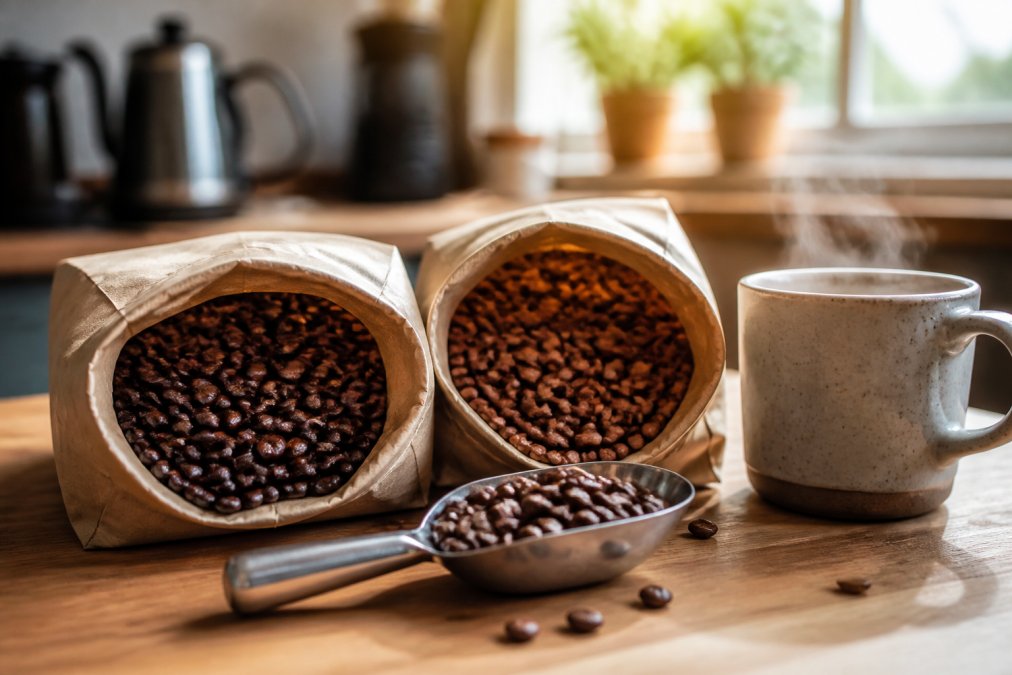
The distinction that matters most is not branding. It is how each roaster handles the gap between roast date and brew date. According to Specialty Coffee Association guidance on freshness, peak flavor sits in a narrow window after roasting, which is why roast-to-order models exist in the first place.
Roast Profile and Flavor Complexity Analysis
Roast profile determines flavor complexity more than origin does, and that is where these two roasters separate. ShortD's Beans publishes a clear light-to-dark range, so you can dial in fruity notes at the light end or bittersweet chocolate undertones at the dark end. Coffee by the Roast rotates profiles, which suits drinkers who want variety but makes consistency harder to guarantee bag to bag.
Flavor complexity in coffee comes from the interaction of bean origin, roast profile, and extraction. A light roast preserves acidity and vibrant, lively top notes; a dark roast trades those for full body and a hazelnut finish. What most reviews never do is break that down attribute by attribute, so here is the structured comparison.
| Attribute | ShortD's Beans | Coffee by the Roast |
|---|---|---|
| Flavor profile | Predictable across the light-to-dark range | Shifts with each rotating release |
| Aroma and fragrance | Consistent, roast-forward | Varies; discovery-driven |
| Body and mouthfeel | Light to full, matched to roast level | Inconsistent bag to bag |
| Aftertaste and finish | Clean, repeatable | Depends on the current profile |
| Consistency | High | Lower by design |
| Best for | Drinkers who know their roast | Drinkers who want variety |
Acidity and Body: Light vs Dark Roast
Acidity and body move in opposite directions as roast level increases. Light roasts keep sharp, vibrant acidity and a lighter mouthfeel; dark roasts mute acidity and build a heavier, medium-bodied to full body cup.
- Light roast: bright acidity, tea-like body, fruit-forward tasting notes
- Medium roast: balanced acidity, rounded mouthfeel, caramel and nut tones
- Dark roast: low acidity, heavy body, bittersweet and smoky finish
Aroma, Aftertaste, and Pairing
Aroma and aftertaste are where the two roasters diverge most in practice. ShortD's Beans tends to deliver a roast-forward aroma that matches its published profile, so what you smell is what you taste. Coffee by the Roast's rotating releases mean the aroma changes month to month, which is exciting for discovery but frustrating if you found a bag you loved.
The aftertaste and finish follow the same pattern. A clean, repeatable finish is the mark of a consistent roast; a shifting finish is the mark of a rotating one. Neither is wrong, they serve different drinkers.
For pairing, a light or medium blonde roast from a single bean origin reveals more nuance and pairs well with fruit, pastry, and lighter breakfasts. A dark roast holds up better in a latte and pairs with chocolate, nuts, and heavier desserts. For a connoisseur chasing flavor complexity, the light end of ShortD's range is the more predictable choice; for a drinker who wants a new profile every month, Coffee by the Roast is built for exactly that.
Roast-to-Order Coffee Advantages: Freshness and Aroma
Roast-to-order coffee ships within days of roasting rather than weeks, which preserves aroma and freshness that warehouse-stored bags lose. This is the single biggest advantage of the model, and it is measurable in the cup: fresher beans degas predictably, which makes extraction more consistent.
What most guides miss is that freshness is not just about roast date. It is about how the bag was stored between roast and delivery. A bean roasted Monday and shipped Tuesday beats a "roasted this month" bag that sat in a distribution center.
Black Cat Coffee Co. roasts in small batches to order, which keeps the window between roast and shipment short. That matters most for gourmet drinkers brewing iced coffee or pour-over, where stale oils flatten the aroma fast.
Caffeine Content and Extraction Performance
This is the section most reviews skip, and it is the one that actually changes how you buy. Caffeine content depends far more on dose, grind size, and brewing technique than on roast level. The common myth says dark roasts hit harder; by weight the difference is small, and what actually moves caffeine is how much coffee you use and how completely you extract it.
Here is the objective picture most guides leave out. A standard 12-ounce drip serving brewed at a 1:16 ratio with roughly 20 grams of coffee lands in the 95-165 mg caffeine range depending on bean and roast (the FDA). A single 1-ounce espresso shot typically runs 60-75 mg (mayoclinic.org). Cold brew concentrate at a 1:8 ratio can push past 200 mg per 12-ounce serving once diluted, which is why it earns its reputation as the strongest option on the menu.
Acidity by Roast Level
Acidity is the other number competitors ignore. Roasting degrades chlorogenic acids as the bean darkens, so a light roast carries noticeably more perceived acidity than a dark roast of the same origin. If you are sensitive to acid, a dark roast from either roaster is the safer pick. If you want the bright, fruit-forward tasting notes that light roasts are known for, you are trading stomach comfort for flavor complexity.
| Roast Level | Approx. Caffeine (per 12 oz drip) | Perceived Acidity | Best For |
|---|---|---|---|
| Light | 95-165 mg | High | Pour-over, fruit-forward profiles |
| Medium | 95-165 mg | Medium | Drip, balanced daily cups |
| Dark | 95-165 mg | Low | Espresso, milk drinks, acid sensitivity |
Equipment-Specific Brewing Techniques
Equipment dictates grind size and brewing technique, and getting this wrong ruins good beans faster than a mediocre roast does. The table below is the practical version most reviews never publish.
| Brewer | Grind Size | Ratio | Time | Notes |
|---|---|---|---|---|
| Drip machine | Medium | 1:16 | 4 min | Most forgiving for medium roasts |
| French press | Coarse | 1:15 | 4 min steep | Full body, sediment-heavy |
| Espresso | Fine | 1:2 | 25-30 sec | Needs fresh beans, 5-10 day rest |
| Pour-over | Medium-fine | 1:16 | 3 min total | Rewards light roasts |
| Cold brew | Coarse | 1:8 | 12-18 hr steep | Highest caffeine per serving |
Extraction is the process of dissolving soluble compounds from ground coffee into water. Under-extraction tastes sharp and sour; over-extraction tastes bitter and hollow. Both roasters supply beans capable of a clean extraction, but matching grind size to your brewer is on you, and it is the single variable that separates a great cup from a wasted bag.
Best Coffee Subscription Services: Value and Pricing
Value in a coffee subscription comes down to cost per cup, flexibility, and how fresh the beans arrive. ShortD's Beans sells per bag starting around $18.00, Bean Box runs about $24.00 per month for curated roaster selections, and Alpine Start sells portable instant packs from $9.99 for outdoor use. Each targets a different drinker.
Black Cat Coffee Co. does not publish fixed pricing, because cost depends on order size, format, and delivery cadence. It is worth checking the site directly for current rates.
| Service | Model | Starting Price | Best For |
|---|---|---|---|
| ShortD's Beans | Per-bag | $18.00 | Custom roast requests |
| Bean Box | Subscription | $24.00/month | Roaster discovery |
| Alpine Start | Per-pack | $9.99 | Backpacking, travel |
| Black Cat Coffee Co. | Roasted to order | Varies by order | Freshness-first daily drinkers |
For buyers comparing best coffee subscription services, the deciding factor is usually whether you want variety or consistency. Curated boxes win on discovery; single-roaster subscriptions win on predictability.
Black Cat Coffee Co. Reviews: User Experience and Convenience
Convenience is where roast-to-order models live or die, and the honest answer is that they are not for everyone. If you need coffee in hand this morning, a grocery shelf beats any subscription. If you can plan a week ahead, the freshness tradeoff is worth it.
Black Cat Coffee Co. addresses the convenience objection with pod formats alongside whole bean, so busy mornings do not require a grinder. The ordering process is straightforward, and delivery is built around keeping the roast-to-ship window short. The black cat adoption mission is a real part of the business model, not a marketing veneer.
Where the model falls short: subscription coffee requires planning, and roast-to-order beans need a week of rest before they hit peak flavor for espresso. Neither is a flaw. Both are the cost of freshness.
Conclusion
The real challenge in choosing between these roasters is not flavor, it is matching the roast profile and delivery model to how you actually brew and shop. ShortD's Beans and Coffee by the Roast both deliver solid small-batch coffee, but neither solves the freshness gap the way a roasted-to-order operation can. If consistency, aroma, and a clear roast profile matter more to you than shelf convenience, Black Cat Coffee Co. roasts in small batches to order, offers blends, single origins, and convenient pods, and ships fast enough to keep the window between roast and brew short. Get started with Black Cat Coffee Co. and taste what fresh-roasted coffee does for your daily cup.
Frequently Asked Questions
What are the primary differences between Shortds and Coffee by the Roast?
Shortds focuses on small-batch roasted beans with customizable roast profiles and a starting price of $18.00 per bag. Coffee by the Roast emphasizes variety through a subscription model, with plans starting at $24.00 per month that include tasting notes and roaster profiles. The main difference is that Shortds offers a straightforward bean purchase, while Coffee by the Roast provides a curated discovery experience with educational content.
How does roast-to-order coffee compare to standard retail coffee?
Roast-to-order coffee is roasted after you place your order, so it reaches you within days of roasting rather than weeks or months. This preserves volatile oils that carry aroma and flavor, resulting in a more vibrant cup with clearer tasting notes. Standard retail coffee often sits in warehouses and on shelves, losing freshness.
What should you look for in a premium coffee subscription service?
Look for roast date transparency, origin information, and whether the service roasts to order or ships from stock. Check the range of roast profiles, from light and fruity to dark and bittersweet, and whether you can adjust frequency. Also review caffeine content if you are sensitive, and confirm the subscription includes brewing recommendations for your equipment, such as grind size for espresso or pour-over.
Is small-batch coffee worth the price difference?
Small-batch roasting allows for closer attention to the roast profile, which can highlight a bean's natural chocolate undertones or fruity notes. The price difference often reflects fresher coffee and more careful sourcing.