

Impact of Mass Produced Coffee Beans Explained
Table of Contents
- The Environmental Impact of Coffee Farming at Industrial Scale
- How Mass Produced Coffee Beans Accelerate Climate Change
- Post-Harvest Processing: The Hidden Environmental Cost
- What Mass Produced Coffee Does to Smallholder Farmers
- Shade-Grown vs. Full-Sun Cultivation: A Side-by-Side Look
- Best Ethically Sourced Coffee Beans 2026: What to Look For
- Benefits of Small-Batch Roasted Coffee Beyond the Cup
- How Consumers Can Reduce Their Coffee Carbon Footprint
- Frequently Asked Questions
Last Updated: September 2, 2026
The Environmental Impact of Coffee Farming at Industrial Scale
Mass produced coffee is one of the most environmentally costly agricultural commodities on the planet. At Black Cat Coffee Co., we source directly from trusted farms precisely because we understand what industrial-scale production can do to the land, the water, and the communities that depend on both.
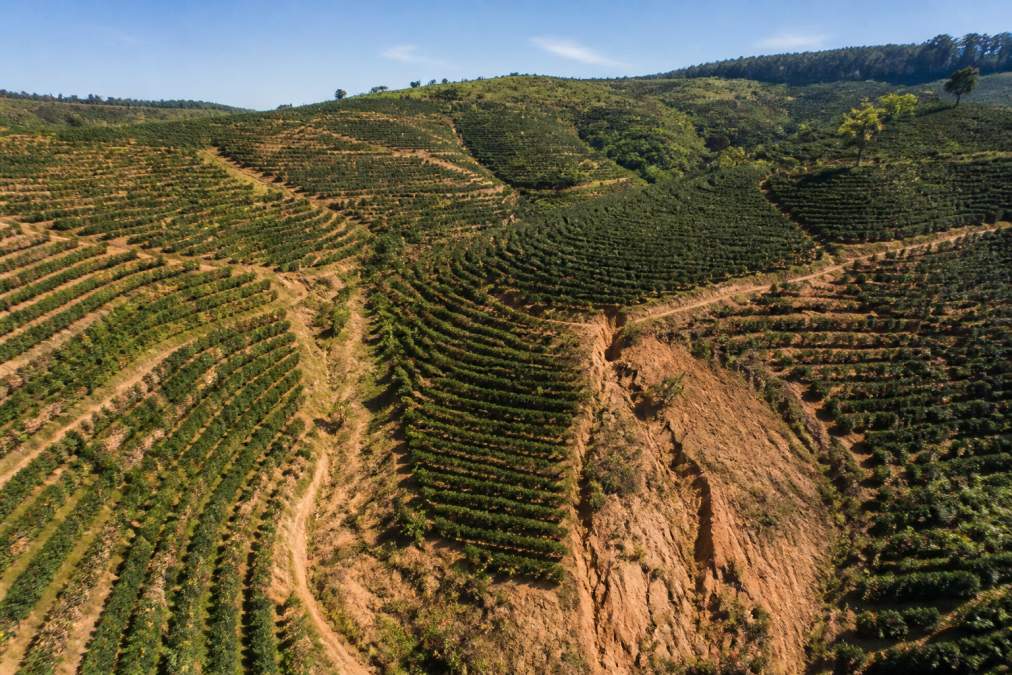
Coffee is the second most traded commodity in the world. Industrial operations favor speed and volume over stewardship, generating significant environmental degradation from planting to processing to shipping.
Deforestation, Habitat Loss, and Biodiversity
To create large-scale plantations, forests are cleared in biodiversity hotspots across Central America, Southeast Asia, and East Africa. This deforestation destroys habitat for migratory birds, insects, and mammals that depend on forest canopy. Traditional shade-grown coffee farms function as secondary forest, supporting bird species and maintaining soil moisture. Industrial monoculture plantations eliminate that canopy entirely. According to Smithsonian Migratory Bird Center's research on shade-grown coffee, shade-grown farms support significantly more bird species than sun-grown monocultures. Once forest is cleared and soil exposed, erosion accelerates, reducing future agricultural productivity and pushing operations to clear more land.
Water Usage, Agricultural Runoff, and Soil Erosion
Coffee production is water-intensive at every stage. Wet-processing methods generate wastewater called "coffee effluent," which is highly acidic and oxygen-depleting. When it enters local waterways without treatment, it kills aquatic life and contaminates drinking water sources. Industrial-scale operations often lack infrastructure to manage this responsibly. Agricultural runoff carries pesticide residue and fertilizer into rivers and groundwater, while soil erosion from full-sun monocultures further degrades water quality.
Without tree cover to anchor soil and return organic matter, mass-produced coffee farms become progressively less fertile, requiring heavier pesticide and fertilizer inputs over time.
How Mass Produced Coffee Beans Accelerate Climate Change
Industrial coffee farming contributes to climate change through deforestation, which releases stored carbon, and heavy use of synthetic fertilizers, which releases nitrous oxide, a greenhouse gas with warming potential many times greater than CO2.
Climate change adaptation is already a crisis for coffee farmers. Rising temperatures, irregular rainfall, and the spread of coffee leaf rust are reducing crop yields across major growing regions. According to World Coffee Research's climate vulnerability assessments, the area suitable for coffee cultivation could shrink significantly by mid-century under current warming trajectories. Mass production systems are poorly equipped to adapt, while agroforestry systems are more resilient but slower and more expensive to establish.
Post-Harvest Processing: The Hidden Environmental Cost
Post-harvest processing is where some of the most acute environmental damage occurs. There are three primary processing methods: washed, natural, and honey.
- Washed processing uses large volumes of water to ferment and rinse the coffee cherry. Industrial-scale wet mills can consume thousands of liters per day, and the resulting wastewater causes severe oxygen depletion in local waterways if discharged untreated.
- Natural processing dries the whole cherry in the sun, using far less water.
- Honey processing sits between the two, retaining some mucilage during drying.
Industrial operations frequently default to washed processing because it produces consistent commodity coffee at high volume. The environmental cost is borne by local ecosystems, not by roasters or retailers downstream.
What Mass Produced Coffee Does to Smallholder Farmers
The global coffee supply chain is built on the labor of smallholder farmers, many of whom own fewer than five acres and have little leverage in price negotiations. Commodity coffee is traded on futures markets, and when global prices drop, smallholder farmers absorb the loss. Many earn below the cost of production during downturns, forcing them to cut corners on labor, inputs, and environmental stewardship.
According to Fairtrade America's resources on coffee farmer livelihoods, the price farmers receive for commodity coffee often fails to cover the full cost of sustainable production, let alone provide a living wage.
Fair Trade vs. Direct Trade: What the Labels Actually Mean
Fair Trade certification guarantees a minimum floor price and requires compliance with labor and environmental standards. The limitation is that the floor price is set by the certifying body, not by actual production costs, and certification fees can burden small cooperatives.
Direct trade is a sourcing relationship where a roaster buys directly from a farm or cooperative at a negotiated price, often above market rate. Done well, it delivers higher premiums than Fair Trade with more transparency. Done poorly, it's an unverified marketing claim.
Neither label is automatically better. Fair Trade offers third-party accountability. Direct trade can offer higher prices and traceability but requires trusting the roaster's word. The best relationships combine elements of both.
| Attribute | Fair Trade | Direct Trade |
|---|---|---|
| Third-party verified | Yes | No |
| Minimum price floor | Yes | Negotiated |
| Farmer premium | Fixed | Variable (often higher) |
| Supply chain transparency | Moderate | High (when done well) |
| Best for | Cooperatives, large farms | Single-origin specialty |
Shade-Grown vs. Full-Sun Cultivation: A Side-by-Side Look
Cultivation method is one of the clearest dividing lines between sustainable and industrial coffee production.
Full-sun cultivation was introduced in the 1970s and 1980s to increase yield. By removing the shade canopy and planting high-density monocultures, farms could produce more coffee per hectare. Yields went up, but so did the need for synthetic fertilizers and pesticides, soil erosion, and habitat loss.
Shade-grown coffee grows under a diverse canopy of trees that regulates temperature, retains soil moisture, supports pest-controlling birds, and returns organic matter to soil. The result is a more complex growing environment that produces coffee with greater flavor depth and requires fewer chemical inputs.
| Factor | Shade-Grown | Full-Sun (Industrial) |
|---|---|---|
| Biodiversity | High | Low |
| Pesticide use | Lower | Higher |
| Soil health | Maintained | Degrades over time |
| Carbon sequestration | Yes | Minimal |
| Yield per hectare | Lower | Higher |
| Flavor complexity | Higher | Often flat |
| Climate resilience | Better | Vulnerable |
The tradeoff is yield. Shade-grown farms produce less per hectare, which is why commodity operations avoid them. For specialty coffee, that lower yield is offset by higher quality and price premiums.
Best Ethically Sourced Coffee Beans 2026: What to Look For
The best ethically sourced coffee beans share transparent sourcing, traceable origin, fair farmer compensation, and sustainable cultivation practices.
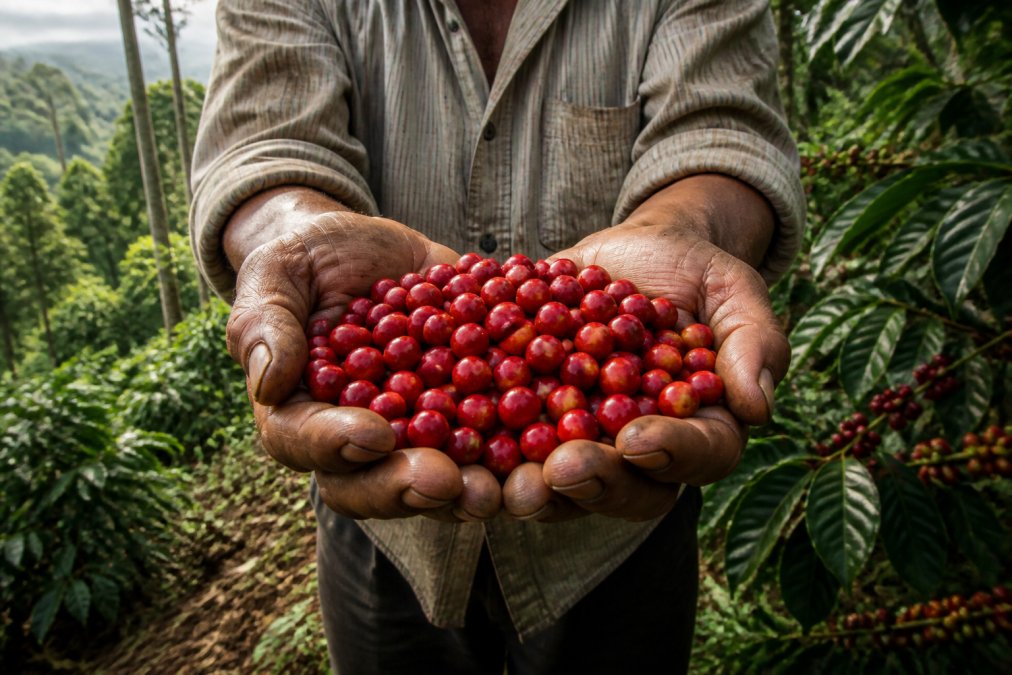
Start with traceability. A coffee that lists only the country of origin tells you very little. Single-origin coffees that name the farm, cooperative, or specific region give you a starting point for evaluating the supply chain. Look for organic certification when it matters to you, it prohibits synthetic pesticides and fertilizers, addressing some of the most acute environmental concerns. Beyond certification, ask about the roaster's sourcing relationships and whether they visit farms or publish sourcing reports.
At Black Cat Coffee Co., every bean comes from carefully vetted farms with sourcing relationships built on quality and trust. Our single-origin offerings are roasted to order, not sitting in a warehouse for months.
Benefits of Small-Batch Roasted Coffee Beyond the Cup
Small-batch roasting supports greater supply chain diversity, reduces dependence on monoculture production, and creates economic incentives for specialty and shade-grown farming. When a roaster pays a premium for distinctive single-origin coffee, that premium flows back to the farm.
Freshness is real, not marketing. Coffee begins to stale from the moment it's roasted. Commodity coffee is typically roasted in bulk, warehoused, and distributed through retail channels that add weeks or months between roast and cup. Roast-to-order coffee eliminates that lag. Small-batch roasting also allows for greater attention to roast profile, optimizing development time and temperature curve for a specific bean's potential.
How Consumers Can Reduce Their Coffee Carbon Footprint
Choose roasters with traceable sourcing. Single-origin, farm-to-cup coffee from roasters who publish sourcing information supports farms and practices that reduce environmental harm.
Prioritize shade-grown and organic certifications. These labels exclude the most damaging production practices.
Buy fresher coffee in smaller quantities. Smaller quantities of freshly roasted coffee reduce waste and support better sourcing economics.
Reconsider your brewing method's waste profile. Single-use plastic pods are a significant source of packaging waste. If pods are important to your routine, look for compostable options.
Ask questions. Ask roasters where their coffee comes from, how farmers are compensated, and what their environmental commitments are. According to Rainforest Alliance's guidance on sustainable coffee purchasing, consumer demand for traceable, certified coffee is one of the most effective levers for driving industry-wide change.
The impact of mass produced coffee on ecosystems, farming communities, and climate is real and well-documented. The alternative is accessible, increasingly affordable, and genuinely better in the cup. Black Cat Coffee Co. was built around a different model: carefully sourced beans from trusted farms, roasted to order for maximum freshness, with single-origin options that give you a real connection to where your coffee comes from. If you're ready to drink better coffee and support the farming practices that make it possible, shop our full collection and find your next favorite roast.
Frequently Asked Questions
Q: What are the environmental consequences of large-scale coffee farming?
A: Large-scale coffee farming drives deforestation, biodiversity loss, and soil erosion. Full-sun monoculture plantations clear native forest to maximize yield, destroying habitat for birds and other wildlife. Pesticide residue and agricultural runoff contaminate local waterways. The heavy water usage required for wet-processing methods adds further strain on regional water supplies. These combined pressures make mass produced coffee one of the more environmentally costly agricultural commodities in the global supply chain.
Q: How does mass-produced coffee affect the livelihoods of small-scale farmers?
A: Commodity coffee prices are set on global futures markets, exposing smallholder farmers to extreme market volatility. When prices drop below the cost of production, farmers absorb the loss with no safety net. Mass produced coffee's race-to-the-bottom pricing squeezes out small farms that cannot compete on volume. Fair trade and direct trade certifications aim to address this by guaranteeing minimum prices or building direct buyer relationships, but coverage across the global supply chain remains limited.
Q: What is the difference between shade-grown and sun-grown coffee production?
A: Shade-grown coffee is cultivated under a canopy of native trees, which supports biodiversity, improves soil health, and reduces the need for synthetic fertilizers. Sun-grown, or full-sun cultivation, clears that canopy to allow denser planting and higher short-term yields. The tradeoff is significant: full-sun farms accelerate soil erosion, reduce carbon sequestration, and eliminate habitat. Shade-grown and organic certification together are among the strongest indicators that a coffee was produced with lower environmental degradation.
Q: What does 'ethically sourced' actually mean in the coffee industry?
A: Ethically sourced coffee generally means the beans were purchased at prices that support farmer livelihood security, produced with attention to environmental standards, and tracked through a transparent supply chain. In practice, certifications like Fair Trade, Rainforest Alliance, and organic certification each measure different things. Direct trade relationships, where a roaster buys directly from a specific farm with full traceability, often go further than third-party labels by ensuring the premium actually reaches the grower rather than an intermediary.