

How to Store Coffee Beans Properly
Table of Contents
- Why Coffee Storage Matters for Flavor
- The Four Enemies of Coffee Freshness
- Best Coffee Storage Canisters and Containers
- How Long Do Coffee Beans Stay Fresh
- Freezing Coffee Beans for Long-Term Storage
- Where to Store Coffee in Your Kitchen
- Signs of Stale Coffee Beans and Common Storage Myths
- Frequently Asked Questions
Last Updated: September 19, 2026
Why Coffee Storage Matters for Flavor
The difference between a vibrant, aromatic cup and a flat, stale one often comes down to how you store coffee beans. Fresh beans deliver the bright flavors and rich aromas that make specialty coffee worth the investment. Poor storage destroys those qualities within days.
Coffee is perishable. Once roasted, beans begin to lose their peak flavor immediately. The roast date matters far more than most people realize. Beans roasted last week taste dramatically better than beans roasted two months ago, even if both are sealed in bags.
At Black Cat Coffee Co., we roast coffee to order specifically because freshness drives flavor. When you store beans properly, you extend that window of peak quality. When you don't, you're essentially wasting money on beans that have already started their decline.
The goal of proper storage is simple: slow down the enemies of freshness. Four factors attack coffee beans from the moment they cool after roasting. Understanding these threats, and how to block them, means every cup tastes better.
The Four Enemies of Coffee Freshness
Coffee beans face four relentless threats that destroy flavor and aroma. Each one works independently, but together they can turn excellent beans into mediocre coffee in weeks.
Heat and Temperature Fluctuations
Heat accelerates the breakdown of volatile compounds that give coffee its flavor profile (Effect of Temperature and Storage on Coffee’s Volatile Compound Profile and Sensory...). High temperatures speed up oxidation, the chemical process that makes beans go stale. Fluctuating temperatures are even worse than consistent heat because they cause moisture and gases to move in and out of the beans repeatedly.
Keep beans in a cool place. Room temperature (around 60-70°F) is ideal. Avoid storing coffee near heat-producing appliances like ovens, dishwashers, or radiators. A pantry or cupboard away from the stove works well.
Temperature swings matter more than most people think. If you move beans from a cool kitchen to a warm car and back, you're accelerating staling. Consistency beats perfection here.
Light Exposure and UV Damage
Sunlight damages coffee beans. UV light triggers chemical reactions that degrade the compounds responsible for flavor and aroma. Even indirect light through a window can harm beans over time.
Opaque containers are non-negotiable. Clear glass jars look nice on a shelf, but they're working against you. The light reaches the beans constantly, degrading their quality day by day.
Store beans in a dark cupboard or drawer. If you use a container, make sure it blocks light completely. This single change can extend the freshness window significantly.
Moisture and Humidity
Coffee is hygroscopic, meaning it absorbs moisture from the air. High humidity causes several problems. Excess moisture can promote mold growth, change the bean's density, and interfere with proper extraction during brewing. Different roast levels respond differently to humidity as well. Light roasts are more porous and absorb moisture faster than dark roasts.
The ideal humidity level is below 60 percent. In humid climates or during summer months, this becomes a real challenge. Bathrooms and kitchens are typically too humid for long-term storage. A dry pantry or bedroom closet is better.
Silica gel packets can help in humid environments, but they're not a complete solution. The real fix is choosing an airtight container that prevents moisture from entering in the first place.
Air Exposure and Oxidation
Oxygen is coffee's enemy. When beans are exposed to air, oxidation begins immediately. This process degrades the volatile compounds that create aroma and flavor. It's the same reason cut apples turn brown.
Airtight containers solve this problem. One-way degassing valves are designed specifically for this. These valves let carbon dioxide escape (which beans naturally release after roasting) while preventing oxygen from entering. This is why they're standard on quality coffee bags.
The longer beans sit exposed to air, the flatter they become. Even a few days in an open container causes noticeable quality loss.
Best Coffee Storage Canisters and Containers
Not all containers are created equal. The right choice depends on how much coffee you buy, how long you plan to store it, and your kitchen setup.
Airtight Containers with One-Way Valves
These are the gold standard for home storage. The one-way valve lets carbon dioxide escape while blocking oxygen from entering. This mimics what happens in commercial coffee bags.
Look for containers made of opaque material with a tight seal. Stainless steel works well. Ceramic is also good if it's glazed properly to prevent moisture absorption. Glass is acceptable only if it's dark or opaque.
The valve matters more than the material. A high-quality valve maintains a one-directional seal even as pressure inside the container changes. Cheap valves fail after a few uses, defeating the entire purpose.
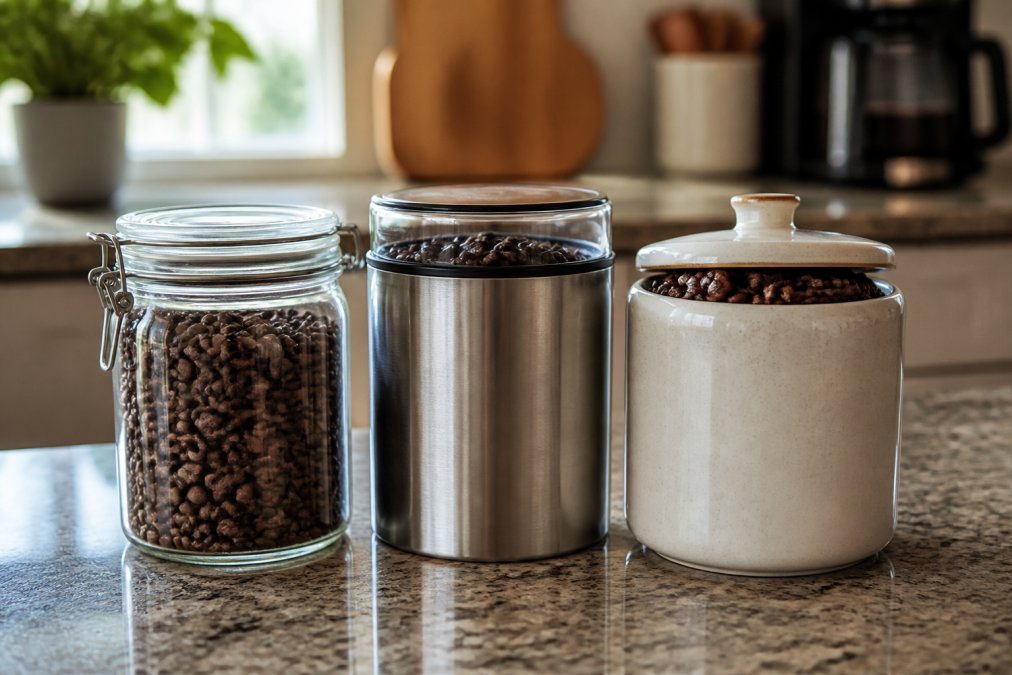
Glass vs. Stainless Steel vs. Ceramic
Each material has trade-offs. Stainless steel is durable, blocks light completely, and doesn't absorb odors. It's the most practical choice for long-term storage. The downside is you can't see how much coffee you have left without opening it.
Glass looks better on a shelf, but only dark or opaque glass protects beans from light damage. Clear glass is attractive but defeats the purpose of proper storage. Glass doesn't absorb odors and is easy to clean. It's fine if your storage location is genuinely dark.
Ceramic works well if it's properly glazed. Unglazed ceramic absorbs moisture, which is bad for beans. Glazed ceramic is nearly as good as stainless steel, though it's more fragile.
Avoid plastic containers. Many plastics absorb coffee oils and odors, which can affect flavor in the long term. Plastic also tends to be more permeable to oxygen than metal or ceramic.
Original Bags with Degassing Valves
The bag your coffee came in might be perfectly adequate for short-term storage. Quality coffee bags from roasters like Black Cat Coffee Co. are designed with one-way degassing valves for exactly this reason.
If the bag is opaque, has a good seal, and includes a one-way valve, it's a solid storage solution for the first few weeks.
How Long Do Coffee Beans Stay Fresh
The answer depends on storage conditions and how you define "fresh." Beans stored properly stay drinkable for months. But peak flavor typically lasts much shorter.
Freezing Coffee Beans for Long-Term Storage
Freezing can extend the life of coffee beans, but it's not a magic solution. Done wrong, it actually damages them. Done right, it can preserve beans for months.
When Freezing Makes Sense
Freezing works best for bulk purchases. If you found beans you love and bought a large quantity, freezing lets you extend their useful life. It's also practical if you drink coffee infrequently and need to store beans for several months.
How to Freeze Beans Without Freezer Burn
The enemy of frozen coffee is condensation. When frozen beans warm up, moisture condenses on their surface. This moisture damages the beans and can promote mold growth.
Where to Store Coffee in Your Kitchen
Location matters as much as the container. The best container in a bad location won't protect your beans.
Avoid the following locations:
- Near the stove or oven (heat)
- Above the refrigerator (heat from the compressor)
- On a sunny windowsill (light and heat)
- In the refrigerator (moisture and temperature fluctuations)
- In the bathroom (humidity)
- Near the dishwasher (heat and moisture)
Good storage locations:
- A cool, dark pantry
- A kitchen cupboard away from heat sources
- A bedroom closet
- A basement or cellar in cool climates
- A dedicated coffee storage box in a cool room
Signs of Stale Coffee Beans and Common Storage Myths
Knowing when beans have gone stale helps you catch storage problems early. Understanding what actually matters, and what doesn't, prevents wasted effort.
How to Identify Stale Beans
Stale beans look different and smell different. Fresh beans have a rich, complex aroma. Stale beans smell flat or dull, like cardboard or old nuts.
Debunking Coffee Storage Myths
Myth: The refrigerator is a good storage location.
False. Refrigerators are humid and have temperature fluctuations every time you open the door. They're one of the worst places to store coffee. If you must refrigerate, use an airtight container and accept that you're sacrificing some quality.
Myth: Freezing coffee is always bad.
Myth: Whole beans last as long as ground coffee.
Myth: Coffee doesn't go stale, it just changes flavor.
Frequently Asked Questions
Is it okay to store coffee beans in a Ziploc bag?
Ziploc bags offer basic protection but are not ideal for long-term storage. While they block some air and light, they lack the oxygen barrier and airtight seal of dedicated coffee containers. For beans you plan to use within 1-2 weeks, a sealed Ziploc works in a pinch. For longer storage, invest in an airtight container with a one-way degassing valve to preserve the peak flavor and volatile compounds that give coffee its aroma.
How long do coffee beans stay fresh after opening?
Opened coffee beans typically stay fresh for 2-4 weeks when stored properly in an airtight container away from heat, light, and moisture. The roast date matters more than the purchase date, beans begin losing volatile compounds and experiencing oxidation immediately after roasting as carbon dioxide degasses. For maximum flavor, grind and brew within 2 weeks of opening. Whole beans last longer than ground coffee because grinding increases surface area and speeds oxidation.
Should you store coffee beans in the freezer or pantry?
A cool, dry pantry is the best choice for regular use. Freezing works only for long-term bulk storage (3-6 months) when beans are vacuum-sealed in airtight containers to prevent condensation and freezer burn. For weekly or monthly consumption, pantry storage at room temperature (around 60-70°F) in an opaque airtight container is simpler and preserves flavor better than repeated freeze-thaw cycles. Avoid temperature fluctuations, which cause condensation and moisture damage.
Is it better to store coffee beans in glass or stainless steel?
Stainless steel is superior for coffee storage because it blocks UV light completely and maintains consistent internal temperature better than glass. Glass allows light penetration, which can degrade flavor compounds over time, even if the container is tinted. Both materials are non-reactive and won't affect taste. For optimal results, choose an opaque stainless steel container with an airtight seal and a one-way degassing valve to release carbon dioxide while preventing air exposure and oxidation.