

Ethical Coffee Sourcing Explained: A 2026 Guide
Table of Contents
- What Is Ethical Coffee Sourcing?
- Why Ethical Sourcing Matters for Coffee Farmers and the Environment
- Fair Trade vs. Direct Trade Coffee: Key Differences
- Coffee Sustainability Certifications in 2026
- How to Identify Ethically Sourced Coffee
- The Role of Supply Chain Transparency and Traceability
- Evaluating Ethical Claims: Beyond Marketing
- Conclusion
- Frequently Asked Questions
Last Updated: September 24, 2026
What Is Ethical Coffee Sourcing?
Ethical coffee sourcing is the practice of purchasing coffee beans through supply chains that prioritize fair compensation for farmers, environmental stewardship, and transparent business practices. It moves beyond the commodity market model where coffee prices fluctuate based on global supply and demand, instead creating direct relationships between roasters and the farms that produce the beans.
At Black Cat Coffee Co., we've built our sourcing model around this principle. When you buy ethically sourced coffee, you're supporting smallholder farmers who often work on just a few acres of land. These farmers face real economic challenges: commodity prices can drop suddenly, leaving them unable to cover basic production costs. Ethical sourcing addresses this by establishing longer-term relationships and fair pricing that reflects the actual cost of sustainable production.
The difference shows up in your cup. Coffee from farms that invest in soil health, biodiversity, and climate resilience tends to have more complex flavor profiles and greater consistency batch to batch. It's not just marketing, shade-grown coffee, for example, develops differently than sun-exposed beans, producing distinct taste characteristics while also supporting forest ecosystems.
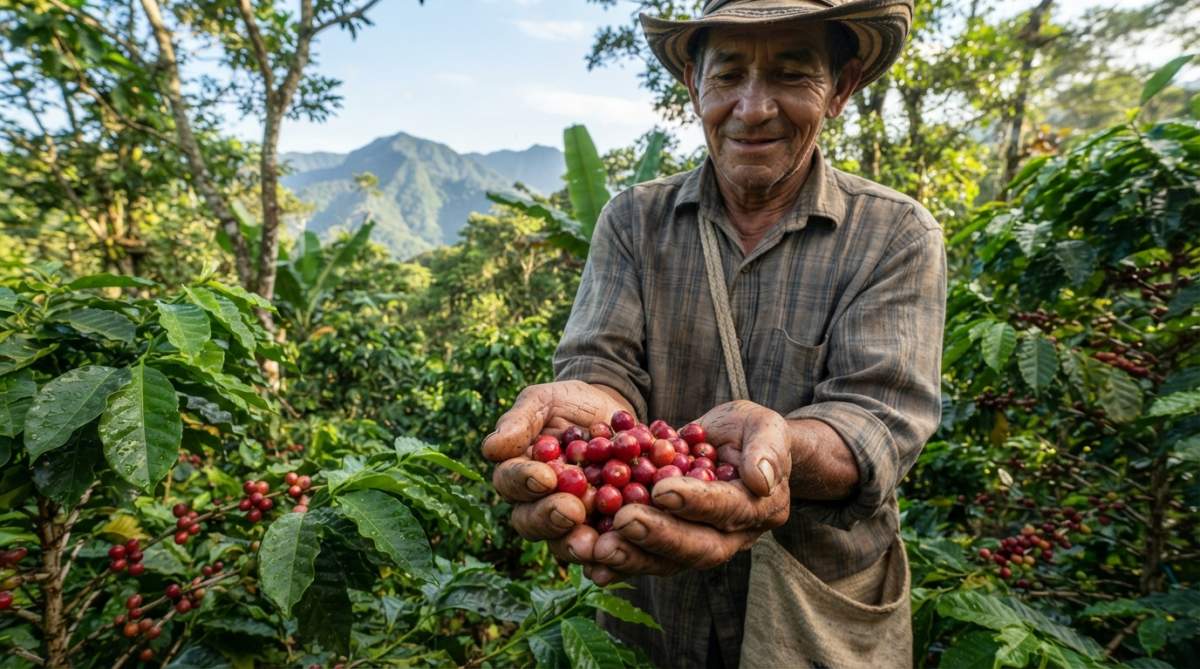
What separates ethical sourcing from conventional commodity purchasing is traceability. You can often identify the specific farm, cooperative, or region where your beans originated. That transparency matters because it creates accountability, roasters can't claim ethical practices without backing them up with verifiable supply chain data.
Why Ethical Sourcing Matters for Coffee Farmers and the Environment
Coffee farming sits at the intersection of two urgent challenges: farmer livelihoods and environmental health. Understanding why ethical sourcing matters requires looking at both.
Most coffee farmers operate on razor-thin margins. A farmer selling beans to a middleman at commodity prices receives a fraction of what you pay at retail. When global coffee prices drop, which happens regularly, farmers struggle to afford basic inputs like seeds, tools, and labor. Some abandon coffee farming entirely, turning to less sustainable crops or clearing forest for cattle grazing. This creates a cycle where economic desperation drives environmental degradation.
Ethical sourcing interrupts that cycle. When roasters commit to direct trade or fair trade relationships, farmers gain pricing predictability. They know they'll receive a living wage rather than a minimum wage for their labor. This distinction matters enormously: a living wage covers actual costs of food, housing, healthcare, and education in a farmer's region, not just subsistence survival.
The environmental impact follows. Farmers with stable income invest in their land. They plant shade-grown coffee under native tree canopy, which preserves biodiversity and sequesters carbon. They implement soil conservation practices that prevent erosion and maintain long-term fertility. They reduce pesticide use because they're not racing to maximize short-term yields just to survive economically.
Supply chain transparency enables this shift. When you know where your coffee comes from, you can verify that farms actually implement sustainable agriculture practices. Third-party verification through certifications provides an additional layer of accountability, though the best indicator is direct relationships where roasters visit farms and understand conditions firsthand.
Fair Trade vs. Direct Trade Coffee: Key Differences
The coffee industry offers multiple pathways to ethical sourcing, and understanding the distinctions helps you evaluate what you're actually buying.
Fair trade certification creates a standardized framework. Fair trade organizations set minimum prices that farmers must receive, regardless of commodity market fluctuations. They verify working conditions, environmental practices, and community development investments. The certification process involves third-party audits and ongoing compliance checks. Fair trade also requires that a portion of proceeds fund community projects, schools, healthcare facilities, or cooperative infrastructure.
The advantage is consistency and verification at scale. Fair trade certification provides assurance that certain standards are being met across thousands of farms. For consumers concerned about labor practices and environmental baseline requirements, fair trade offers a recognized benchmark.
Direct trade takes a different approach. Rather than relying on certification bodies, direct trade emphasizes personal relationships between roasters and farmers. Roasters often visit farms directly, negotiate prices based on actual production costs and quality, and build multi-year purchasing commitments. There's no standardized certification, instead, the roaster's reputation depends on transparency and honest dealing.
The advantage is flexibility and typically higher farmer payouts. Direct trade relationships often result in prices exceeding fair trade minimums because roasters can pay based on quality and direct knowledge of farm conditions. The roaster can also support specific farming practices tailored to each farm's situation rather than applying one-size-fits-all standards.
The trade-off: direct trade requires more effort to verify. You're relying on the roaster's integrity and transparency. Black Cat Coffee Co. manages this by providing transparency in our sourcing. This allows customers to evaluate our claims directly rather than depending solely on third-party certification.
Neither approach is inherently superior. Fair trade works well for large-scale purchasing where personal relationships aren't feasible. Direct trade excels for specialty roasters focused on specific origins and willing to invest in farmer relationships. Many roasters use both, fair trade for some origins and direct trade for others.
Coffee Sustainability Certifications in 2026
The certification landscape has evolved significantly. In 2026, the most credible certifications focus on verifiable impact rather than generic sustainability claims.
Organic certification confirms that farms avoid synthetic pesticides and fertilizers. This matters for soil health and reduces chemical runoff into water systems. However, organic alone doesn't guarantee fair wages or community investment, a farm can be certified organic while still paying farmers poverty wages.
Rainforest Alliance certification evaluates farms across environmental, social, and economic criteria. Certified farms must demonstrate biodiversity conservation, worker rights protections, and business viability. The certification involves annual audits and ongoing compliance monitoring. Rainforest Alliance is particularly strong on environmental stewardship and labor standards.
UTZ Certified focuses on sustainable livelihoods and environmental responsibility. UTZ certification requires traceability throughout the supply chain, which enables verification that certified beans actually reach certified roasters and consumers. This traceability component addresses a real problem: certification fraud where uncertified coffee gets mixed with certified beans.
Carbon Trust Certification addresses the climate impact of coffee production and shipping. This certification evaluates the full carbon footprint, from farming practices through roasting and delivery. It's increasingly relevant as consumers prioritize climate impact alongside social equity.
The catch: certifications vary dramatically in rigor and verification. Some certifications have minimal audit frequency or rely on self-reporting. Others conduct rigorous third-party inspections. When evaluating certified coffee, research the specific certification body's standards, audit frequency, and track record of enforcement.
Beyond certifications, supply chain transparency has become a 2026 baseline expectation. Leading roasters publish detailed sourcing information: farm names, processing methods, harvest dates, and pricing paid to farmers. This transparency allows you to verify claims independently rather than relying solely on certification logos.
How to Identify Ethically Sourced Coffee
Identifying genuinely ethical coffee requires looking beyond marketing language to actual evidence.
Start with the roaster's supply chain documentation. Ethical roasters publish specific information about their sources: farm names, cooperatives, regions, and processing methods. If a roaster uses vague language like "responsibly sourced from Central America," that's a red flag.
The Role of Supply Chain Transparency and Traceability
Supply chain transparency has become essential for ethical coffee sourcing. When you can trace your coffee from farm to cup, you gain the ability to verify every claim made about it.
Evaluating Ethical Claims: Beyond Marketing
Not all ethical sourcing claims are equal. Learning to distinguish genuine commitments from marketing requires understanding common claims and what actually backs them up.
Conclusion
Ethical coffee sourcing reflects a fundamental choice about what you support with your purchasing power. It's not just about flavor, though ethically sourced coffee typically tastes better because farms investing in sustainable practices produce higher-quality beans. It's about recognizing that coffee farmers deserve fair compensation, that environmental health matters, and that supply chain transparency creates accountability.
Frequently Asked Questions
How is coffee ethically sourced?
Ethical coffee sourcing involves paying farmers fair prices, ensuring safe working conditions, protecting the environment, and maintaining supply chain transparency. Roasters work directly with farms or through fair trade organizations, verify labor practices through third-party audits, and prioritize sustainable agriculture methods like shade-grown cultivation. This approach ensures farmers earn living wages, communities benefit from development programs, and ecosystems remain healthy.
What are the primary differences between fair trade and direct trade coffee?
Fair trade coffee uses third-party certification and a standardized minimum price floor, benefiting many smallholder farmers through cooperatives. Direct trade eliminates middlemen, allowing roasters to pay farmers higher prices based on quality and build long-term relationships. Direct trade offers greater transparency and farmer empowerment but requires roasters to invest in direct relationships. Fair trade provides broader farmer access to markets but offers less price flexibility.
How can consumers verify ethical sourcing claims on coffee packaging?
Look for recognized certifications like Fair Trade USA, Rainforest Alliance, or Organic USDA labels on packaging. Check the roaster's website for supply chain transparency details, farm names, and sourcing methods. Verify third-party audit results and ask roasters directly about their sourcing practices. Be cautious of vague claims like 'ethically sourced' without certification backing. Reputable roasters provide farm-to-cup traceability and publish sourcing reports.
Why does ethical sourcing matter for small-batch coffee roasters?
Small-batch roasters depend on direct relationships with farmers to source high-quality beans and maintain consistency. Ethical sourcing builds brand trust with conscious consumers who value transparency and social impact. Supporting farmer cooperatives and sustainable practices ensures stable supply chains and reduces price volatility. Roasters that prioritize ethical sourcing differentiate themselves in a competitive market and create meaningful economic empowerment for farming communities.
What role do third-party certifications play in modern coffee supply chains?
Third-party certifications provide independent verification that coffee meets labor, environmental, and economic standards. Organizations like Fair Trade USA and Rainforest Alliance audit farms and supply chains to confirm compliance with labor rights, pesticide reduction, and biodiversity protection. Certifications build consumer confidence and ensure accountability across the supply chain. However, certifications vary in rigor, so consumers should research specific standards and look for multiple certifications for stronger assurance.
What are the emerging trends in coffee sustainability for 2026?
Blockchain technology is enabling real-time traceability from farm to cup, allowing consumers to verify sourcing claims instantly. Roasters increasingly focus on carbon footprint reduction, distinguishing between production emissions and shipping impacts. Living wage standards are replacing minimum wage benchmarks, ensuring farmers earn sustainable income. Post-harvest processing ethics are gaining attention, with roasters verifying worker conditions during fermentation and drying. Regenerative agriculture practices and climate resilience programs are becoming standard among ethical brands.