

Buy Roasted to Order Coffee Online: A 2026 Guide
Table of Contents
- What Roasted to Order Coffee Actually Means
- Why Coffee Bean Roast Date Importance Matters for Freshness
- Single Origin vs Blend Coffee: Which Should You Choose
- Small Batch Roasting and Flavor Profiles
- How to Store Coffee Beans for Maximum Freshness
- Shipping, Delivery, and Sustainability
- Brewing Method Matching and Getting the Most from Your Beans
- Frequently Asked Questions
Last Updated: September 21, 2026
What Roasted to Order Coffee Actually Means
Roasted to order coffee is coffee roasted specifically after you place your order, rather than sitting on a shelf for weeks or months after roasting. The moment your order arrives at the roastery, the green beans go into the roaster. Within days, your freshly roasted beans ship to your door. At Black Cat Coffee Co., this approach defines how we source and prepare every bag.
Roasted-to-order coffee stays fresher longer. Coffee loses volatile aromatic compounds immediately after roasting, a bean roasted six months ago has lost much of its character, while one roasted three days ago retains its full flavor.
Coffee contains hundreds of flavor compounds that degrade when exposed to oxygen. Roasting creates a porous bean structure that accelerates this degradation. Fresher beans retain more compounds when you brew.
Buying roasted to order coffee online means choosing a supply chain designed for maximum flavor retention. Small roasteries like Black Cat Coffee Co. operate this way to guarantee the aroma and taste reaches your cup.
Why Coffee Bean Roast Date Importance Matters for Freshness
The coffee bean roast date importance cannot be overstated. It's the single most predictive factor for how your coffee will taste. A bean roasted yesterday will taste dramatically different from the same bean roasted three weeks ago, even if stored identically.
The Science of Degassing: Why Freshly Roasted Coffee Needs Rest
Degassing is the process by which carbon dioxide (CO₂) trapped inside the bean during roasting escapes into the air. This is not a flaw, it's essential chemistry that directly affects your brew quality.
During roasting, heat creates CO₂ as a byproduct, which the bean's porous structure traps. After roasting stops, the bean releases CO₂ gradually over 24-48 hours, with the most significant outgassing in the first 12 hours.
Excess CO₂ interferes with water's ability to extract flavor compounds. Coffee roasted less than 12 hours ago produces under-extraction, sour notes, and thin cups. In espresso, excess CO₂ creates crema that looks impressive but indicates incomplete extraction.
Specialty roasters recommend waiting 3-7 days after roasting. By day three, excess CO₂ has mostly escaped and water can extract the full range of flavor compounds. By day seven, degassing is complete and the bean reaches peak flavor.
After day 14, oxidation becomes the problem. Oxygen reacts with flavor compounds that create brightness and complexity. A bean roasted 30 days ago has lost measurable brightness compared to one roasted 14 days ago, even with identical storage.
Roast Date as Your Freshness Baseline
The roast date printed on your bag is the starting point for this timeline. It tells you exactly where your coffee is in the degassing-to-oxidation spectrum.
- Roasted 1-3 days ago: Still actively degassing. Best for cold brew or espresso if you prefer lower acidity. Not ideal for pour-over or drip, where CO₂ interference is most noticeable.
- Roasted 3-10 days ago: Peak flavor window. Degassing is complete. Oxidation has barely begun. This is the ideal range for all brewing methods.
- Roasted 10-21 days ago: Still excellent. Flavor is bright and complex. Suitable for all brewing methods.
- Roasted 21-30 days ago: Noticeably flatter than fresher beans. Brightness fades. Still drinkable, but the roaster's intended flavor profile is compromised.
- Roasted 30+ days ago: Flavor becomes dull and one-dimensional. Oxidation has progressed significantly. This is why shelf coffee at grocery stores tastes stale.
The roast date printed on your bag tells you where your coffee is in its flavor arc. Coffee roasted five days ago needs a few more days to degas. Coffee roasted two weeks ago is ready to brew and will stay at peak flavor for another week.
Black Cat Coffee Co. prints the roast date on every bag to eliminate guesswork about freshness and give you control over when to open your bag for maximum flavor.
Single Origin vs Blend Coffee: Which Should You Choose
Single origin vs blend coffee represents a fundamental choice about flavor profile and consistency. Single-origin beans come from one specific farm or region. Blends combine beans from multiple origins. Each approach has distinct advantages.
Single-origin coffee offers complexity and terroir, the beans reflect the specific soil, altitude, and climate where they grew. A single-origin Ethiopian natural-process bean tastes completely different from a Colombian washed bean. You're tasting place and farming practice in your cup.
Blends prioritize balance and consistency by combining beans from different origins. A blend might pair high-acidity African beans with smooth Indonesian beans to create something greater than either alone. Blends are also more forgiving if one origin has an off-crop.
For daily drinking, blends are approachable and consistent. For exploration, single-origin beans reward attention and reveal seasonal variations and farm-specific characteristics.
When you buy roasted to order coffee online from Black Cat Coffee Co., you can choose single-origin or blend. The choice depends on what you value in your cup.
Small Batch Roasting and Flavor Profiles
Small batch roasting refers to roasting coffee in smaller quantities, typically 10-25 pounds at a time, rather than 50-100 pound batches. This approach allows roasters to control variables more precisely and respond to the specific characteristics of each bean lot.
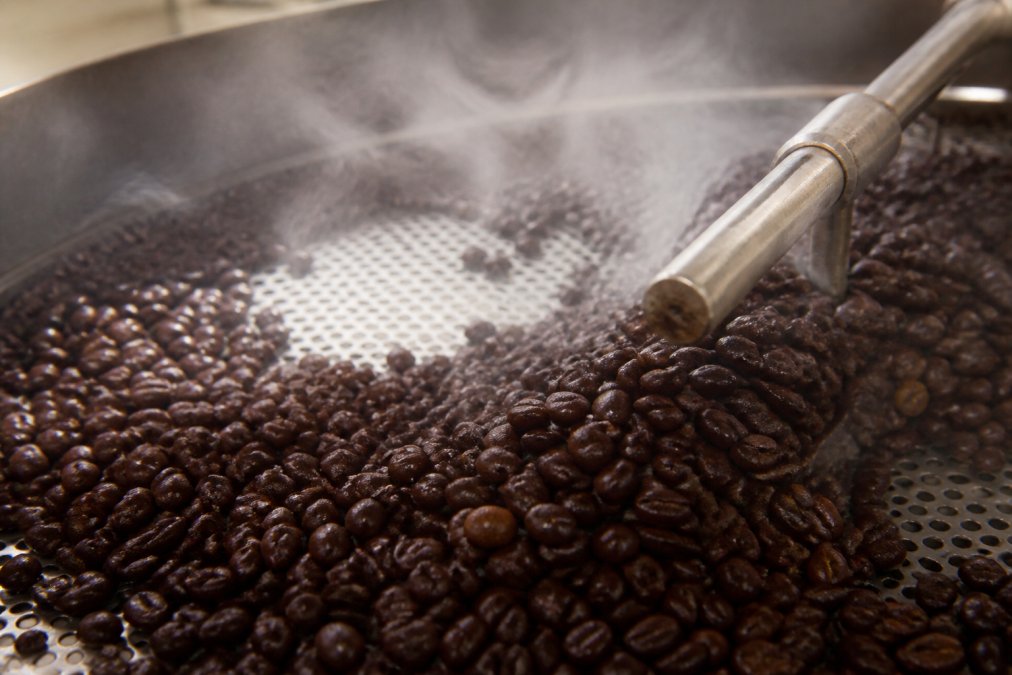
Smaller batches allow roasters to monitor color development, listen to roast progression cracks, and adjust heat in real time.
With roasted to order coffee online, the small batch approach is your advantage. The roaster develops a specific roast profile for a specific bean lot, knowing it ships within days to people who care about quality.
Light, Medium, and Dark Roast Options
Light roasts preserve origin acidity and brightness by removing beans just after first crack. They retain origin characteristics, an Ethiopian light roast tastes like Ethiopia, a Colombian like Colombia. These work best for pour-over and drip brewing.
Medium roasts balance origin character with roast flavor, reaching between first and second crack. They work across espresso, French press, and drip brewing, appealing to the broadest audience.
Dark roasts emphasize roast character over origin, developing chocolate, caramel, and smoky notes. They work well in espresso and French press, where their body and boldness shine.
Your choice depends on your brewing method and taste preference. If you're unsure, start with medium. When you buy roasted to order coffee online, the roaster can recommend roast levels for your specific brewing setup.
How to Store Coffee Beans for Maximum Freshness
Proper storage extends the flavor window of roasted to order coffee. Understanding the enemies of freshness, oxygen, light, heat, and moisture, helps your coffee stay excellent longer.
The Four Enemies of Coffee Freshness
Oxygen is the primary threat. After CO₂ finishes degassing (around day 7), oxygen enters the bean's porous structure and reacts with volatile compounds that create brightness and complexity. A sealed bag loses flavor much more slowly than an open bag.
Light, particularly ultraviolet light, accelerates oxidation by speeding chemical reactions that break down flavor compounds. Quality roasters use opaque bags because transparent bags degrade coffee faster.
Heat accelerates oxidation. Room temperature (around 70°F) is ideal. Every 18°F increase roughly doubles flavor degradation. A bag at 85°F tastes noticeably flatter than one at 70°F after two weeks.
Moisture promotes mold growth and interferes with bean structure, flattening flavor. Freezing introduces moisture through condensation when beans thaw, damaging the interior.
Unopened Bag Storage
Quality roasters use bags with one-way valves that allow CO₂ to escape while blocking oxygen.
Store unopened bags in a cool, dark place away from sunlight and heat sources. Room temperature (65-75°F) is ideal.
Opened Bag Storage: The Critical Window
Once opened, oxidation accelerates dramatically.
Transfer opened coffee to an airtight container: opaque glass jars with rubber gaskets, stainless steel canisters with silicone gaskets, vacuum-seal containers, or resealable original bags with one-way valves.
Store sealed containers in a cool, dark place.
Grinding and Immediate Brewing
Grinding increases surface area 5-10 times, causing oxidation to accelerate exponentially.
Grind immediately before brewing.
The Roasted-to-Order Advantage in Storage
Buying roasted to order coffee online means starting with maximum freshness, giving you a longer storage window than pre-roasted coffee. A bag roasted three days ago stays excellent for 2-3 weeks with proper storage.
Black Cat Coffee Co. ships beans in bags with one-way valves and light-blocking layers, including storage guidance with every order. Days 3-10 after roasting are your peak flavor window.
Shipping, Delivery, and Sustainability
Shipping speed directly impacts freshness. Coffee roasted Monday and arriving Friday is fresher than coffee roasted two weeks ago arriving the next day.
Brewing Method Matching and Getting the Most from Your Beans
Different brewing methods extract coffee differently: French press uses immersion, pour-over uses percolation, espresso uses pressure. Each requires different grind sizes and roast profiles.
Frequently Asked Questions
What does roasted to order coffee actually mean?
Roasted to order means your coffee beans are roasted after you place your order, not weeks or months in advance. The beans are shipped shortly after roasting, typically within days. This process locks in maximum aroma, flavor, and freshness, eliminating the lag time that store-bought coffee experiences.
How important is the roast date on coffee beans?
The roast date is one of the most critical factors in coffee quality. The roast date tells you exactly when the beans were processed, giving you transparency that bag dates or vague 'fresh' labels cannot provide. When buying roasted to order coffee, the roast date is typically very recent, ensuring you receive beans at peak freshness with full flavor expression and vibrant aroma.
Should I buy single origin or blend coffee?
Single origin beans come from one specific farm or region and showcase distinct flavor characteristics tied to that geography and altitude. They're ideal if you want to explore specific tasting notes like fruity, floral, or earthy profiles. Blends combine beans from multiple origins to create balanced, consistent flavor profiles that work well across different brewing methods. Blends often offer smoother, more approachable flavors, while single origins provide complexity and traceability. Your choice depends on whether you prefer exploring unique regional flavors or enjoying a reliable, balanced cup every time.
How should I store roasted to order coffee beans after they arrive?
Store beans in an airtight container away from direct sunlight, heat, and moisture. A cool, dark cupboard or pantry is ideal; avoid the refrigerator or freezer, which can introduce condensation. Keep the original bag if it has a one-way valve, which allows CO2 to escape while preventing oxygen from entering. Check the roast date on arrival to confirm freshness, and grind only what you need just before brewing to preserve aroma and flavor compounds.