

Best Coffee for Sensitive Stomachs: 2026 Guide
Table of Contents
- Why Coffee Upsets Sensitive Stomachs
- Low Acid Coffee Benefits for Digestive Health
-
Best Coffee for Sensitive Stomachs: Top Picks Compared
- 1. Black Cat Coffee Co., Small-Batch, Roasted-to-Order Freshness
- 2. Lifeboost Coffee, Single-Origin, Third-Party Tested Low-Acid
- 3. Puroast Coffee, 70% Less Acid via Unique Roasting Process
- 4. Purity Coffee Ease Dark Roast, Gut-Health Focused Organic Dark Roast
- 5. Tyler's Coffee, Acid-Free via Proprietary Z-Roasting
- 6. Golden Ratio Coffee, Tea-Like, Ultra-Low Acidity
- 7. Tieman's Fusion Coffee, Functional Ingredients for Smooth Digestion
- Cold Brew vs. Hot Coffee for Digestion: Which Is Gentler?
- Stomach-Friendly Coffee Brewing Methods That Reduce Acidity
- Mushroom Coffee and Chicory Root: Alternatives Worth Trying
- Post-Consumption Strategies to Ease Stomach Discomfort
- Which Sensitive Stomach Coffee Is Right for You?
- Frequently Asked Questions
Last Updated: August 31, 2026
Most people with a sensitive stomach assume coffee is simply off-limits. That's wrong. At Black Cat Coffee Co., we've spent years sourcing and roasting beans that deliver smooth, rich experiences because we understand how roast level, origin, and freshness shape what ends up in your cup. The real issue isn't coffee itself, it's the wrong coffee, brewed the wrong way.
The best coffee for sensitive stomachs shares consistent traits: lower acidity, darker roast profiles, and minimal processing byproducts. Below, we break down why some coffees cause discomfort, which products perform well for sensitive drinkers, and how brewing method can make or break the experience.
Quick Picks:
- Best Overall: Black Cat Coffee Co., small-batch, roasted-to-order freshness with a smooth finish
- Best Third-Party Tested: Lifeboost Coffee, single-origin, low-acid, and rigorously tested
- Most Acid Reduction: Puroast Coffee, 70% less acid via unique roasting process
- Best for Severe GERD: Tyler's Coffee, proprietary Z-Roasting eliminates acid formation
- Most Unique Format: Golden Ratio Coffee, tea-like, ultra-low acidity in single-serve pouches
Why Coffee Upsets Sensitive Stomachs
Coffee-related stomach discomfort stems from two distinct problems that most people conflate.
Caffeine Sensitivity vs. Acid Sensitivity: Two Different Problems
Caffeine sensitivity and acid sensitivity are separate physiological responses requiring different solutions.
Caffeine sensitivity means your body overreacts to caffeine itself. Caffeine stimulates the central nervous system and accelerates gastric acid secretion, triggering gastrointestinal distress, jitteriness, and loose stools. If you feel wired, anxious, or experience digestive upset with any coffee type, caffeine is your primary trigger. The solution is decaf or lower-caffeine options like Golden Ratio Coffee.
Acid sensitivity is different. Organic acids in coffee, primarily chlorogenic acid, irritate the stomach lining or trigger acid reflux and GERD symptoms. People with gastritis, GERD, or compromised stomach lining often fall into this category. They may tolerate caffeine fine but react badly to high-acid light roasts.
Knowing which category you fall into changes everything about which coffee you should buy.
How Chlorogenic Acid and Roast Level Affect Your Gut
Chlorogenic acid is the primary acid compound responsible for coffee's brightness and irritating afterburn. The key: chlorogenic acid breaks down during roasting. Dark roasts, which spend more time at high temperatures, contain significantly less chlorogenic acid than light roasts.
Dark roasting also produces n-methylpyridinium, which research suggests may inhibit gastric acid production. This is why dark roasts tend to be gentler on the stomach lining than lighter counterparts.
If your stomach reacts to coffee, start with a dark roast before switching brands entirely. According to research published by the American Chemical Society on coffee compounds and digestion, the roasting process fundamentally transforms coffee's chemical composition in ways that directly affect gastrointestinal tolerance.
Low Acid Coffee Benefits for Digestive Health
Low-acid coffee has a pH level closer to neutral than standard brewed coffee. Standard drip coffee typically sits around pH 4.5 to 5.0. Specialized low-acid coffees push that above 5.5 or even 6.0, meaningfully reducing the chemical load on your stomach lining.
Lower acidity reduces the likelihood of triggering acid reflux, lessens irritation to inflamed stomach lining, and often produces a smoother finish with less bitterness. Many people with gastritis or GERD report being able to drink low-acid coffee comfortably when standard coffee is completely off the table.
Three factors drive lower acidity naturally: growing elevation, processing method (wet-processed beans are generally more acidic than dry-processed), and roast level. Specialty low-acid brands manipulate one or more of these levers intentionally.
As documented in Harvard T.H. Chan School of Public Health's overview of coffee and health, coffee's relationship with digestive health is nuanced and highly individual, which is exactly why choosing the right variety matters more than avoiding coffee altogether.
Best Coffee for Sensitive Stomachs: Top Picks Compared
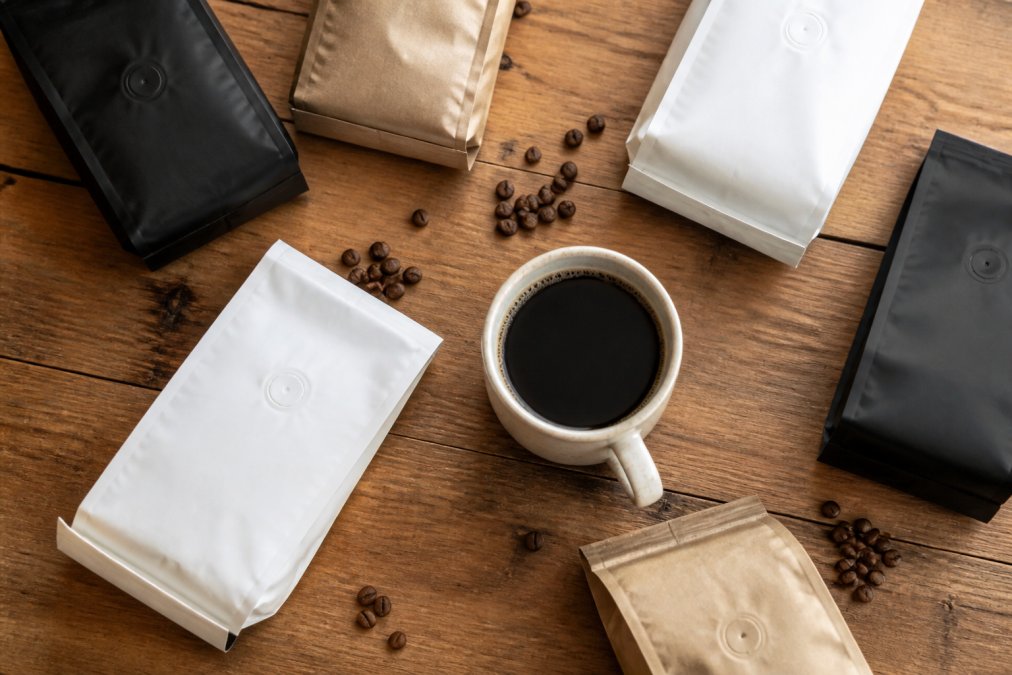
The seven options below were selected based on their acid profiles, ingredient transparency, and suitability for different sensitivity types.
| Coffee | Acid Level | Roast | Best For |
|---|---|---|---|
| Black Cat Coffee Co. | Low (fresh-roasted) | Multiple options | Freshness-first sensitive drinkers |
| Lifeboost Coffee | Very low (pH 6.0+) | Light, medium, dark | Organic, third-party tested |
| Puroast Coffee | Very low (pH 5.7-5.9) | Dark, medium | Severe acid sensitivity |
| Purity Coffee Ease | Low | Dark | Gut health focus |
| Tyler's Coffee | Acid-free | Multiple | GERD, severe sensitivity |
| Golden Ratio Coffee | Ultra-low | Light (gold roast) | Tea-drinkers, caffeine sensitive |
| Tieman's Fusion Coffee | Low (pH 5.85-5.97) | Dark, medium, decaf | Functional ingredient seekers |
1. Black Cat Coffee Co., Small-Batch, Roasted-to-Order Freshness
For most sensitive stomach sufferers, freshness is paramount. Black Cat Coffee Co. roasts to order, meaning your beans ship within days of roasting, not weeks. Stale coffee develops harsh, oxidized compounds that amplify bitterness and acidity. The range includes bold blends, single-origin options, and convenient coffee pods, giving sensitive drinkers flexibility to find their ideal roast level.
Best for: Sensitive drinkers who want maximum freshness and roast variety without sacrificing quality.
2. Lifeboost Coffee, Single-Origin, Third-Party Tested Low-Acid
Lifeboost Coffee is the most rigorously tested option on this list. Single-origin Arabica beans from Nicaragua, shade-grown at high elevation, are third-party tested for mycotoxins, pesticides, and heavy metals. The pH consistently measures above 6.0, meaningfully closer to neutral than standard coffee. USDA Organic certified, available in light, medium, and dark roasts, and offered in whole bean, ground, and K-Cup formats.
Pros: Verified low acidity, extensive purity testing, wide roast variety. Cons: Higher price point than conventional options.

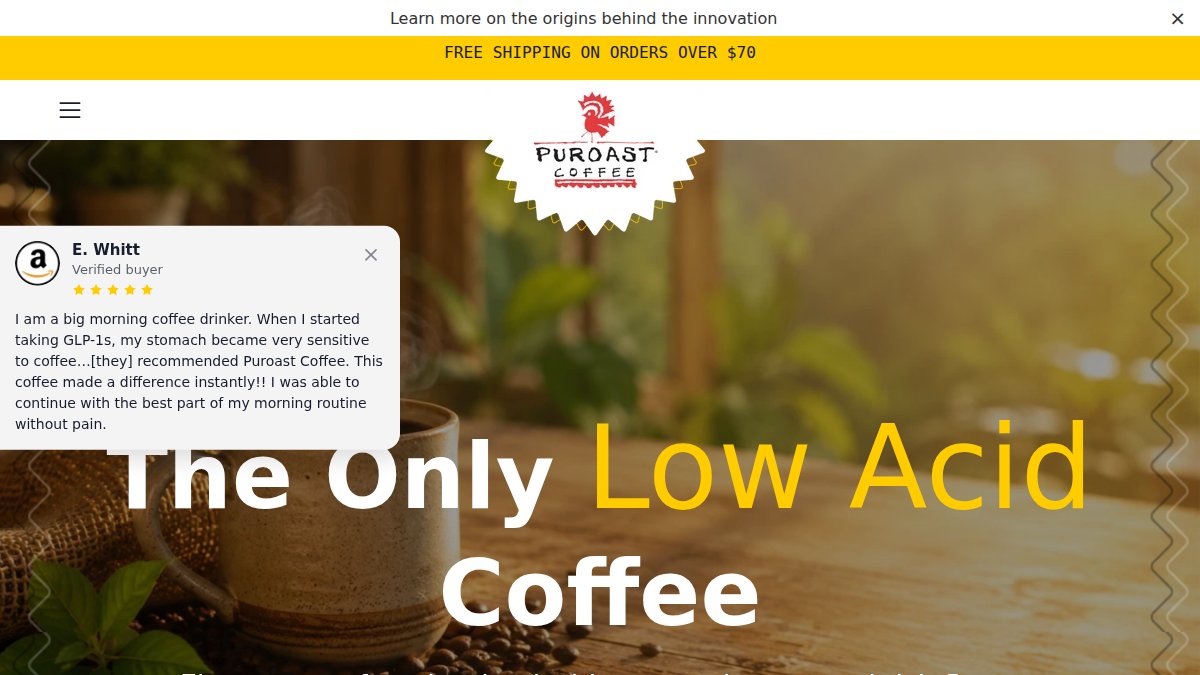
3. Puroast Coffee, 70% Less Acid via Unique Roasting Process
Puroast's roasting process reduces acidity by up to 70% compared to standard roasted coffees, landing the pH between 5.7 and 5.9. They also cite seven times more antioxidants than green tea. Available in French Roast, Hazelnut, Vanilla, and Bourbon Pecan Torte varieties, plus whole bean, ground, and single-serve pods.
Pros: Independently verified low acidity, high antioxidant content, smooth taste. Cons: Very dark and mellow flavor; adjustment takes a few cups.
4. Purity Coffee Ease Dark Roast, Gut-Health Focused Organic Dark Roast
Purity Coffee's Ease Dark Roast is specifically formulated for gut health with enhanced prebiotic benefits, USDA Organic certification, and third-party testing for acid content.
Pros: Gut-health focus with prebiotic benefits, rigorous third-party testing, rich dark roast flavor. Cons: Limited to dark roast format only.
5. Tyler's Coffee, Acid-Free via Proprietary Z-Roasting
Tyler's Coffee makes the boldest claim: the world's first acid-free coffee, using proprietary Z-Roasting that prevents acid formation rather than simply reducing it. USDA Organic Certified AAA Arabica beans, available in regular and decaf, ground, whole bean, and single-serve pods. For people with severe GERD or extreme acid sensitivity, this is the logical next step.
Pros: Completely acid-free, organic, maintains natural caffeine. Cons: Higher price point; flavor differs from traditional coffee.
6. Golden Ratio Coffee, Tea-Like, Ultra-Low Acidity
Golden Ratio sits in its own category. Roasted at lower temperatures to a golden hue rather than traditional brown, it produces a tea-like beverage five times less acidic than standard black coffee. Available in original, vanilla coconut, and chai spiced varieties in single-serving pouches.
Pros: Extremely low acidity, unique smooth flavor, convenient format. Cons: Won't satisfy anyone seeking bold, traditional coffee character.
7. Tieman's Fusion Coffee, Functional Ingredients for Smooth Digestion
Tieman's blends 100% Arabica coffee with Matcha Green Tea, Rooibos Red Tea, and Goji Berry for a low-acid, functional coffee with pH of 5.85 (medium roast) to 5.97 (dark roast). Matcha provides sustained energy, Rooibos adds calming properties, and Goji Berry contributes antioxidant support.
Pros: Unique functional ingredient blend, steady energy without jitters, gentle on stomach. Cons: Added ingredients meaningfully alter traditional coffee taste.
Cold Brew vs. Hot Coffee for Digestion: Which Is Gentler?
Cold brew is significantly gentler on sensitive stomachs than hot-brewed coffee. Cold brew extraction uses cold or room-temperature water over 12-24 hours, producing a concentrate with measurably lower acidity, some estimates put the difference at 60-70% less acid by pH measurement.
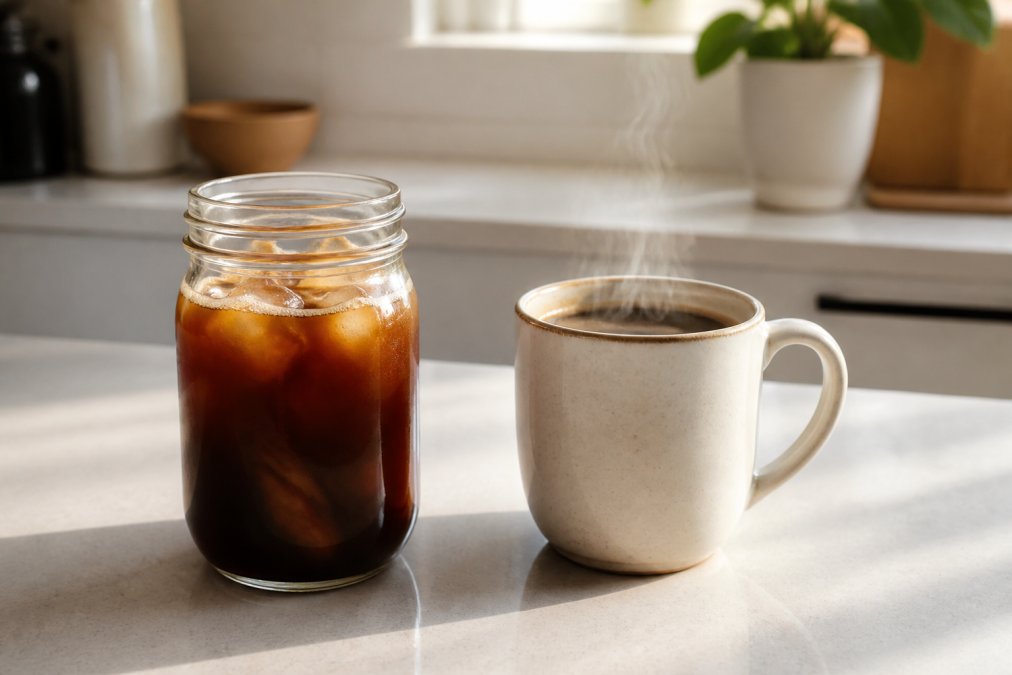
Hot brewing extracts acids more aggressively because heat accelerates the dissolution of chlorogenic acid and other organic compounds. Cold brew's slow extraction pulls flavor compounds without the same acid extraction, producing a naturally sweeter, smoother finish.
Water Chemistry and pH Levels: The Hidden Variable
Your tap water's pH level and mineral content directly affect the final acidity of your brewed coffee. Hard water (high in calcium and magnesium) tends to produce a less acidic cup because minerals buffer the coffee's acids during extraction. Soft water or low-pH water extracts more aggressively, amplifying acidity.
A simple fix: use a water filter that retains minerals, or add a small pinch of baking soda to your water before brewing. Baking soda is alkaline and directly neutralizes some of the coffee's gastric acid load. According to the American Chemical Society's guide to coffee chemistry and water interaction, water mineral content is one of the most underappreciated variables in coffee flavor and acidity.
Stomach-Friendly Coffee Brewing Methods That Reduce Acidity
The brewing method you choose affects acidity as much as the beans themselves.
Cold brew: Use a 1:4 coffee-to-water ratio, steep for 12-24 hours in the refrigerator, and dilute before drinking.
French press with coarser grind: A coarser grind reduces over-extraction, limiting harsh acids released into the cup.
Shorter brew time: Over-extraction amplifies bitterness and acid. For drip coffee, aim for 4-6 minutes. For pour-over, keep total brew time under 4 minutes.
Lower water temperature: Brewing at 185-195°F (85-90°C) rather than 200°F reduces acid extraction.
Paper Filtration and Equipment Choice
Paper filters trap coffee oils called diterpenes, specifically cafestol and kahweol. These oils can irritate the stomach lining in sensitive individuals. French press and metal-filter methods leave these oils in the cup. If you're using a French press and experiencing stomach issues, switching to paper-filtered drip or pour-over may provide relief even with the same beans.
Mushroom Coffee and Chicory Root: Alternatives Worth Trying
Mushroom coffee and chicory root are credible options for people whose sensitivity is severe enough that even low-acid coffee causes problems.
Mushroom coffee blends traditional coffee with functional mushroom extracts, most commonly lion's mane, chaga, or reishi. The mushroom content dilutes the overall caffeine load and may provide adaptogenic benefits that help regulate stress response.
Chicory root brewed as a coffee substitute contains zero caffeine and zero coffee acids. It produces a dark, slightly bitter beverage that approximates coffee more closely than most herbal alternatives. Chicory root also contains inulin, a prebiotic fiber that actively supports gut health. For people who need to eliminate coffee entirely but miss the ritual, chicory root is the most practical replacement.
Post-Consumption Strategies to Ease Stomach Discomfort
Even the best coffee for sensitive stomachs can cause issues if consumed under the wrong conditions.
- Never drink coffee on an empty stomach. Food buffers gastric acid and slows how quickly coffee compounds reach the stomach lining.
- Avoid coffee when stressed. Stress elevates cortisol, which increases gastric acid production independently of coffee.
- Limit to 1-2 cups per sitting. Spacing consumption gives your stomach time to process each dose of acid and caffeine.
- Try dairy or a dairy alternative. Milk and oat milk are alkaline and can partially neutralize coffee's acidity.
- Wait 30 minutes after waking. Cortisol peaks in the first 30-45 minutes after waking. Drinking coffee during this window amplifies stimulant effects and increases gastrointestinal distress likelihood.
Which Sensitive Stomach Coffee Is Right for You?
The right choice depends on which type of sensitivity you're managing.
| Sensitivity Type | Best Starting Point | Why |
|---|---|---|
| General sensitivity, freshness matters | Black Cat Coffee Co. dark roast | Roasted-to-order minimizes oxidation compounds |
| Acid reflux / GERD, need verified pH | Lifeboost or Puroast | Lab-tested pH above 5.7 |
| Severe GERD, nothing else works | Tyler's Coffee | Proprietary acid-free roasting |
| Caffeine sensitivity | Golden Ratio Coffee | Ultra-low acidity, tea-like caffeine level |
| Gut health beyond acid reduction | Purity Coffee Ease | Prebiotic benefits, organic, dark roast |
| Functional benefits + smooth digestion | Tieman's Fusion Coffee | Matcha, Rooibos, Goji blend |
The common thread across all seven options: dark roasts, careful sourcing, and minimal processing byproducts. If you're starting from scratch, a freshly roasted dark blend is the single highest-impact change you can make before investing in a specialty low-acid product. As the Specialty Coffee Association's guide to coffee freshness and quality notes, freshness is one of the most significant and most overlooked variables in coffee quality and digestive experience.
Frequently Asked Questions
What kind of coffee won't make my stomach hurt?
Dark roasts, cold brew, and coffees labeled low-acid are the gentlest options for sensitive stomachs. Dark roasting converts more chlorogenic acid into compounds like N-methylpyridinium, which may actually reduce gastric acid secretion. Cold brew extraction produces significantly less acid than hot brewing. Beyond roast and brew method, some single-origin beans may naturally carry lower acidity. Pairing any of these with paper filtration further reduces oils and sediment that can irritate the stomach lining.
Is dark roast coffee better for sensitive stomachs than light roast?
Generally, yes. The longer, hotter dark roast process breaks down a greater proportion of chlorogenic acids and produces N-methylpyridinium, a compound associated with lower gastric acid stimulation. Light roasts retain more of those original acids, which can trigger heartburn or acid reflux in people with gastritis or gastroesophageal reflux disease. That said, roast level is only one factor. Brew method, water quality, and whether you drink coffee on an empty stomach all play a role in how your digestive system responds.
What is the difference between caffeine sensitivity and acid sensitivity in coffee?
They are separate issues that often get confused. Acid sensitivity means the pH level and chlorogenic acid content of the coffee irritate your stomach lining or esophagus, causing heartburn, afterburn, or gastritis symptoms. Caffeine sensitivity is a different reaction: caffeine stimulates gastric acid production and can relax the lower esophageal sphincter, worsening gastroesophageal reflux disease regardless of the coffee's pH. If switching to low-acid coffee does not help, a low-caffeine or decaf option may address the real culprit.
Which brand of coffee is the least acidic?
Tyler's Coffee markets itself as the world's only truly acid-free coffee, using a proprietary Z-Roasting process to prevent acid formation. Puroast independently verifies 70% less acid than conventionally roasted coffees, with pH readings between 5.7 and 5.9. Lifeboost consistently tests above pH 6.0. For context, standard brewed coffee typically sits around pH 4.5 to 5.0. The right choice depends on severity of sensitivity: most people do well with a quality dark roast or cold brew, while those with severe GERD may benefit from a specialized low-acid or acid-free product.
Does cold brew coffee cause less bloating than hot coffee?
Cold brew extraction produces roughly 60 to 70 percent less acid than hot brewing because the slow, room-temperature steep draws fewer acidic compounds from the grounds. Less gastric acid stimulation means reduced bloating, heartburn, and gastrointestinal distress for many sensitive drinkers. However, cold brew is often brewed at a higher coffee-to-water ratio, so caffeine content per serving can be higher than hot coffee. If caffeine sensitivity contributes to your stomach issues, diluting cold brew concentrate before drinking is a practical fix.
Black Cat Coffee Co. offers small-batch, roasted-to-order coffee sourced from trusted farms worldwide, delivered fresh so you get the smoothest, most stomach-friendly cup possible from the moment the bag arrives. Browse the full selection of dark roasts, single-origin options, and convenient coffee pods at Black Cat Coffee Co. and find the right fit for your stomach. Shop Coffee today.