

Best Airtight Containers for Coffee Bean Storage
Table of Contents
- Why Coffee Freshness Matters
- How to Store Coffee Beans Properly
- How Long Does Coffee Stay Fresh in an Airtight Container
- Best Airtight Containers for Coffee Bean Storage
- Coffee Storage Best Practices
- Sustainability and Material Lifecycle
- Frequently Asked Questions
Last Updated: September 26, 2026
Why Coffee Freshness Matters
The moment you open a bag of freshly roasted coffee beans, they begin to lose their character. Oxygen exposure triggers oxidation, which degrades the oils and aromatics that give quality coffee its complexity and depth. Within days, even premium beans start tasting flat and stale.
This is why storage matters more than most coffee drinkers realize. The difference between beans stored properly and those left in a paper bag is dramatic. One tastes vibrant and nuanced. The other tastes like cardboard.
At Black Cat Coffee Co., we focus on roasting to order specifically because freshness is non-negotiable for flavor. But even the best roasted beans require proper storage to maintain that quality. The right airtight container becomes essential to protecting your investment in premium coffee.
How to Store Coffee Beans Properly
Proper coffee storage starts with understanding what degrades beans. Four enemies attack coffee in storage: oxygen, light, heat, and moisture. Each one accelerates staleness in different ways.
The Impact of Oxygen, Light, and Moisture on Beans
Oxidation is the primary culprit. When oxygen contacts coffee oils, a chemical reaction begins that flattens flavor profiles and creates rancid notes. This process accelerates with exposure to light, which adds heat energy to the equation. Ultraviolet rays actively degrade compounds in beans, which is why transparent containers fail despite being airtight.
Moisture presents a different problem. Coffee is hygroscopic, it absorbs water from humid air. This moisture triggers mold growth and dilutes the concentrated flavor compounds that make specialty coffee worth buying. Even small amounts of humidity can noticeably impact taste within weeks.
Temperature swings matter too. Beans stored in warm kitchens degrade faster than those kept cool. This is why pantry storage beats countertop placement near appliances.
The ideal storage environment is cool, dark, and dry with minimal oxygen exposure.
Stainless Steel vs. Glass vs. Ceramic Containers
Each material has distinct advantages for coffee storage.
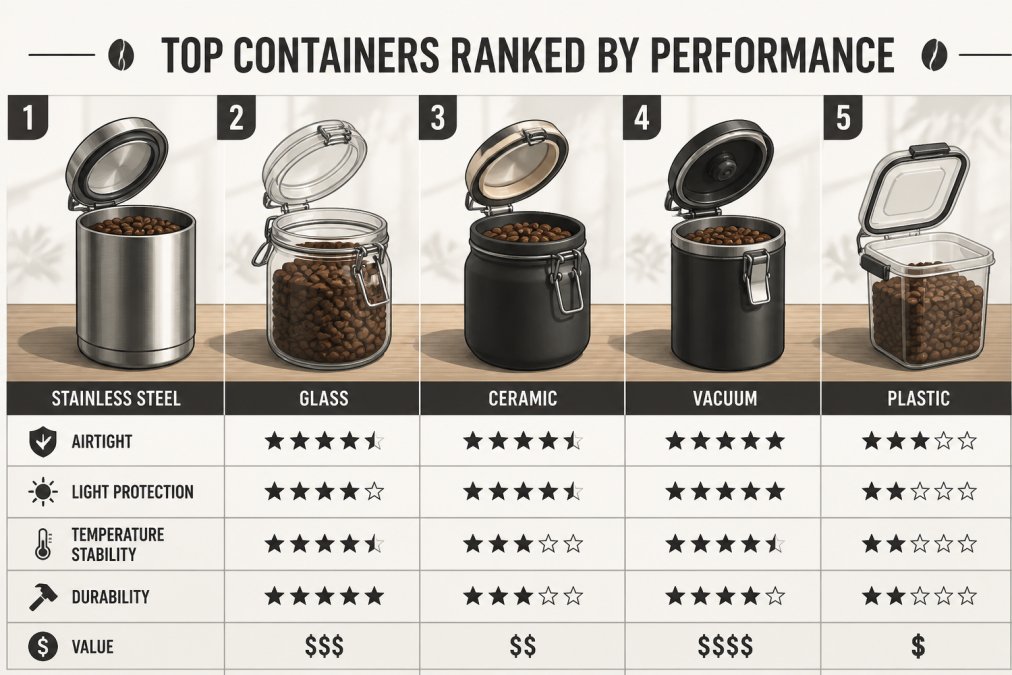
Stainless steel offers the best overall protection. It's opaque, blocking 100% of light. It doesn't absorb odors or flavors from previous contents. Stainless steel is durable and won't crack from temperature changes. The main drawback is you can't see how much coffee remains without opening the lid.
Glass containers allow you to monitor bean levels visually, which appeals to many people. However, standard glass is transparent, allowing light penetration that damages beans. Some manufacturers use tinted or opaque glass to address this, which works well. The tradeoff is that glass can develop odor retention over time and may crack if dropped.
Ceramic offers a middle ground. It's opaque and doesn't absorb odors like plastic does. Ceramic is durable and looks attractive on shelves. The limitation is that ceramic chips and cracks more easily than metal, and the seal quality depends entirely on the lid mechanism.
For maximum freshness preservation, stainless steel with an effective airtight seal outperforms the alternatives.
How Long Does Coffee Stay Fresh in an Airtight Container
The shelf life of coffee in a proper airtight container depends on several factors: roast date, bean type, storage temperature, and seal quality.
Freshly roasted beans reach peak flavor 3-7 days after roasting as CO2 gas (released during roasting) escapes from the beans. This degassing period is normal. A container with a one-way valve allows this gas to escape without letting oxygen back in, ideal for fresh beans.
After the degassing window, properly sealed beans maintain good flavor for 2-4 weeks at room temperature. The flavor gradually declines after that point, but beans remain drinkable for 6-8 weeks. Beyond 8 weeks, even in an airtight container, noticeable staleness becomes unavoidable at room temperature.
Freezer storage extends this timeline significantly. Beans frozen immediately after roasting (after initial degassing) can maintain quality for 3-4 months or longer. The key is freezing in airtight containers to prevent moisture and freezer burn. Thaw completely before opening to avoid condensation inside the container.
Vacuum-sealed storage accelerates freshness retention by removing oxygen entirely, extending the room-temperature window by several weeks compared to standard airtight containers.
Best Airtight Containers for Coffee Bean Storage
The best airtight containers for coffee bean storage combine three features: effective sealing, light blocking, and practical usability. Different designs excel in different scenarios.
Vacuum-Seal Leaders
Fellow Atmos Vacuum Coffee Canister stands out for its vacuum-lock indicator and integrated pump mechanism. The twist-to-seal lid removes air effectively, and the visual indicator shows whether the seal is maintained. At around $30, it's a premium option that delivers measurable oxygen removal. The downside is that twisting the lid requires a deliberate action each time, which some users find inconvenient.
Ankomn Turn-N-Seal uses a patented rotating lid that creates a vacuum seal. The stackable design appeals to people managing multiple bean varieties. At approximately $40, it's a significant investment, but the seal quality is excellent. The mechanism requires careful handling to avoid damaging the lid, which is a practical consideration for daily use.
Airscape Coffee Canister employs an inner plunger that physically pushes air out before sealing. This design provides visual feedback, you see the plunger compress as air leaves. Available in stainless steel or ceramic, it's priced around $32. The plunger requires regular cleaning to maintain effectiveness, adding a maintenance step some users find tedious.
Budget-Friendly Options
Veken Coffee Canister delivers solid functionality at approximately $18. The airtight clasp closure isn't a true vacuum, but it's effective for everyday storage. The built-in date tracker wheel and viewing window are practical touches that help you rotate stock. This container works well for people who drink coffee regularly and don't need maximum long-term preservation.
Coffee Gator Canister includes a one-way CO2 release valve, making it ideal for freshly roasted beans that are still degassing. At around $22, it offers good value. The stainless steel construction blocks light effectively. It's not vacuum-sealed, but the one-way valve prevents oxygen from entering while gas escapes, a smart design for fresh beans specifically.
BlinkOne Coffee Canister provides straightforward airtight storage in a minimalist stainless steel design at approximately $25. The aluminum-lined interior and silicone seal block light and moisture effectively. Limited capacity options mean you'll need to choose the right size upfront, but the durability is solid.
Best for Degassing Freshly Roasted Beans
Coffee Gator Canister is purpose-built for freshly roasted beans. The one-way valve allows CO2 to escape during the critical 3-7 day degassing period without letting oxygen back in. This is the ideal scenario for beans purchased from roasters like Black Cat Coffee Co., where roast-to-order freshness is the entire point.
Tightpac Coffeevac offers lightweight, portable vacuum storage starting at approximately $15. The push-button release makes it easy to remove air without complicated mechanisms. The plastic construction may retain odors over extended use, but for rotating fresh beans regularly, this limitation rarely matters. It's the most affordable true vacuum option.
OXO Good Grips Pop Container uses a push-button seal mechanism that's remarkably easy to operate. At around $20, it's not light-proof (a significant drawback), but the simplicity appeals to people who value convenience. It works adequately for beans consumed within 2-3 weeks, which covers most home coffee drinkers.
| Container | Type | Starting Price | Best For |
|---|---|---|---|
| Fellow Atmos | Vacuum-seal | $30 | Maximum oxygen removal |
| Ankomn Turn-N-Seal | Vacuum-seal | $40 | Stackable organization |
| Airscape | Plunger vacuum | $32 | Visual air-removal feedback |
| Veken | Clasp closure | $18 | Budget-conscious daily use |
| Coffee Gator | One-way valve | $22 | Freshly roasted degassing |
| BlinkOne | Silicone seal | $25 | Minimalist design preference |
| Tightpac Coffeevac | Vacuum-seal | $15 | Portable storage |
| OXO Pop | Push-button seal | $20 | Ease of use priority |
Coffee Storage Best Practices
Storing coffee correctly extends freshness and protects your investment in quality beans. Several practical steps make a measurable difference.
Ease of Cleaning and Maintenance
Most coffee containers accumulate residual oils and grounds over time. Stainless steel and glass clean easily with warm water and mild soap. Avoid abrasive scrubbers that can damage seals.
Silicone gaskets require special attention. These seals absorb coffee oils and can develop odor retention. Clean gaskets separately with warm soapy water and dry completely before reassembling. Some gaskets benefit from occasional replacement if they develop persistent odors, check whether your container's gasket is replaceable.
One-way valves should never be submerged or scrubbed aggressively. These delicate mechanisms can fail if damaged. Wipe around the valve with a damp cloth and allow air-drying.
Long-Term Freezer Storage Protocols
Compatibility with Different Roast Profiles
Sustainability and Material Lifecycle
Coffee storage containers represent a long-term purchase, and the environmental impact extends beyond the initial manufacturing.
Frequently Asked Questions
Should you store coffee beans in an airtight container?
Yes. Airtight containers protect beans from oxidation, moisture, and light exposure, which cause flavor degradation and staleness. Oxygen is the primary enemy of coffee freshness; an airtight seal significantly extends shelf life compared to open bags or standard jars. For maximum preservation, choose containers with silicone gaskets or vacuum-seal mechanisms that create a true barrier against air and humidity.
How long does coffee stay fresh in an airtight container?
Whole beans in a properly sealed airtight container stay fresh for 2-4 weeks at room temperature. Vacuum-sealed containers extend this to 4-6 weeks. In the freezer, beans in an airtight container can maintain quality for 3-4 months. Freshness depends on roast date, container quality, and storage temperature. Roasted-to-order coffee from Black Cat Coffee Co. starts at peak freshness, making proper storage essential to preserve those flavors.
What type of container is best for coffee beans?
Vacuum-sealed stainless steel or borosilicate glass containers offer the best protection. Vacuum-seal technology removes oxygen, preventing oxidation and flavor loss. One-way valves allow CO2 off-gassing from freshly roasted beans while blocking oxygen entry. Stainless steel provides superior light and heat blocking compared to glass. For budget-conscious buyers, airtight canisters with silicone gaskets and clasp closures deliver solid protection at lower cost.
Can you store coffee beans in the freezer, and does the container matter?
Yes, freezer storage extends freshness significantly when done correctly. Use a vacuum-sealed or airtight container to prevent moisture absorption and freezer burn. Allow beans to reach room temperature before opening to avoid condensation inside the container. Divide beans into smaller airtight portions so you only thaw what you need, keeping the rest frozen. This approach maintains flavor profile and aroma for 3-4 months.