

5 Alternatives to Standard Coffee Blends for 2026
Table of Contents
- Why Look Beyond Standard Coffee Blends?
- Quick Comparison: 5 Coffee Alternatives at a Glance
- 1. MUDWTR: Functional Mushrooms for Steady Energy
- 2. Dandy Blend: The Budget-Friendly Roasted Root
- 3. Clevr Blends: Superfood Lattes for a Creamy Ritual
- 4. Four Sigmatic: Mushroom Coffee With Familiar Flavor
- 5. Golde: Turmeric and Matcha for Anti-Inflammatory Mornings
- Caffeine-Free Coffee Alternatives: What to Know Before You Switch
- Frequently Asked Questions
Last Updated: October 3, 2026
Why Look Beyond Standard Coffee Blends?
The jittery spike and the 3 p.m. crash are the two most common reasons people start hunting for 5 alternatives to standard coffee blends, and the search is worth taking seriously.
Most guides on this topic stop at a product roundup. That misses the harder questions: how much does each cup cost, what happens when you cut caffeine abruptly, and which ingredients trigger allergies.
Quick Comparison: 5 Coffee Alternatives at a Glance
Here is how the five options stack up on caffeine, format, and best use case.
| Alternative | Caffeine Level | Format | Best For |
|---|---|---|---|
| MUDWTR | Under 1/7th of coffee | Powder, add hot water | Steady energy, no crash |
| Dandy Blend | Caffeine-free | Instant powder | Budget-conscious switches |
| Clevr Blends | Varies by blend | Instant latte powder | Creamy, sweet ritual |
| Four Sigmatic | Half-caf or caffeine-free | Ground or instant | Keeping coffee taste |
| Golde | Caffeine-free | Powder blend | Anti-inflammatory mornings |
Each option trades something. None of them tastes exactly like a dark roast, and pretending otherwise sets you up for disappointment.
1. MUDWTR: Functional Mushrooms for Steady Energy
MUDWTR blends organic lion's mane, cordyceps, chaga, and reishi mushrooms with cacao and masala chai spices. It contains less than 1/7th the caffeine of a standard cup of coffee, so you get a gentle lift without the spike-and-crash pattern.
The mushroom base is where the appeal sits. Lion's mane and cordyceps are classified as adaptogens, ingredients that many people use to support focus and stress response. A common mistake is expecting an instant coffee substitute. MUDWTR tastes earthy and spiced, closer to a chai-cacao blend than a roast.
Taste, Prep, and Who It's For
Whisk one scoop into hot water or milk. It takes about 30 seconds, and it dissolves cleanly without grit. The mouthfeel is thinner than a latte, so if you want creaminess, add oat milk.
Cost runs higher per serving than standard coffee, which is the main trade-off. For anyone chasing a jitter-free morning ritual, that premium buys a different kind of energy.
2. Dandy Blend: The Budget-Friendly Roasted Root
Dandy Blend is an herbal coffee substitute made from roasted dandelion root, chicory, and barley extracts. It is naturally caffeine-free and gluten-free, and it dissolves instantly in hot or cold liquid.
This is the cheapest option on the list by a wide margin, running roughly $0.11 to $0.18 per cup. For anyone drinking three or four cups a day, that gap adds up fast.
Cost Per Cup and Flavor Notes
The flavor leans toward roasted root with a mild bitterness and no acidic aftertaste. It is not coffee, but it scratches a similar itch, especially with a splash of cream. Dandelion root also carries trace minerals, which is a small bonus for a drink this affordable.
The trade-off is depth. Where a single-origin coffee has layers of acidity and sweetness, Dandy Blend is one note. Some people love that simplicity. Others find it flat after a week.
- Instant prep: stirs into hot or iced liquid in seconds
- No equipment: no French press, pour-over, or grinder needed
- Cold-friendly: works as an iced drink without clumping
3. Clevr Blends: Superfood Lattes for a Creamy Ritual
Clevr Blends makes instant superfood lattes that combine adaptogens, probiotics, and oat milk powder. You add water, stir, and drink. No steeping, no brewing technique, no cleanup.
The formula includes ashwagandha and lion's mane, plus plant-based creamer from oat milk and coconut cream.
Two caveats. Some blends contain added sugars, so check the label if you are watching intake. And the caffeine level varies by flavor, meaning a matcha version is not caffeine-free.
4. Four Sigmatic: Mushroom Coffee With Familiar Flavor
Four Sigmatic is the easiest transition for people who genuinely like the taste of coffee. The company offers both half-caf and caffeine-free versions, so you can taper rather than quit cold.
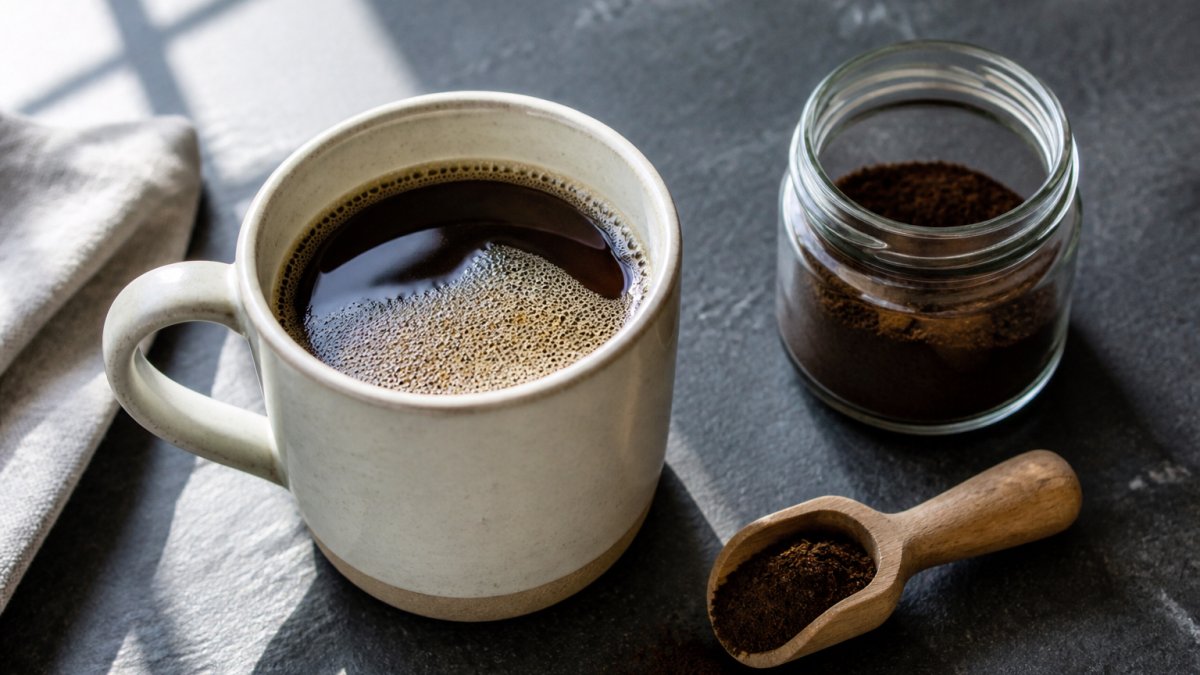
Its mushroom blends use dual-extracted fruiting bodies, and the products are third-party lab tested for purity. That testing matters if you are buying functional mushrooms, because contamination and mislabeling are known problems in the supplement space. The FDA guidance on dietary supplement labeling explains what manufacturers are required to disclose.
The half-caf options keep some caffeine, which is either the point or a dealbreaker depending on your goal. If you are trying to eliminate caffeine entirely, choose the caffeine-free SKUs.
5. Golde: Turmeric and Matcha for Anti-Inflammatory Mornings
Golde builds its drink mixes around anti-inflammatory ingredients, with turmeric as the anchor. The blends are vegan, cruelty-free, and free of artificial fillers or sweeteners.
Turmeric contains curcumin, a compound studied for its antioxidant properties.
If your goal is replacing the ritual rather than the taste, Golde works well. If you want something that mimics coffee, look at Four Sigmatic instead.
Caffeine-Free Coffee Alternatives: What to Know Before You Switch
The 5 alternatives to standard coffee blends covered here are drinks made from roasted roots, mushrooms, or botanicals that deliver a coffee-like ritual without the stimulant. They range from instant powders to steeped herbal infusions, and the right choice depends on whether you want flavor, function, or both. What almost no roundup tells you is how to actually get off caffeine without a miserable week, which ingredients can trigger reactions, and what each cup really costs once you divide by servings.
A Tapering Plan That Actually Works
Quitting caffeine abruptly can trigger headaches, fatigue, irritability, and brain fog for several days. The severity tracks with how much you were drinking, so a three-cup-a-day habit hits harder than a single morning mug. Tapering is the standard approach most practitioners recommend, and the mechanics are simple:
- Measure your baseline. Count your actual daily caffeine load, not just cups. An 8-ounce drip coffee typically lands around 95 mg, a single espresso shot around 63 mg, and a cold brew can run considerably higher depending on the ratio.
- Cut by about a quarter every three to four days. If you drink four cups, drop to three for four days, then two, and so on. Slower is fine. Faster tends to fail.
- Replace the dropped cup, don't just remove it. This is where half-caf products earn their place. Four Sigmatic's half-caf line is built for exactly this step, letting you keep the coffee taste while stepping the dose down.
- Hold at the last cup before zero. Many people stall at one cup. Staying there for a week or two before cutting the final cup reduces withdrawal intensity.
- Hydrate and don't skip meals. Dehydration and low blood sugar amplify withdrawal symptoms, so the week you taper is a bad week to also start intermittent fasting.
A common pattern is that days two and three are the worst, then symptoms fade. If headaches persist past a week, the taper was likely too fast.
Allergy and Sensitivity Warnings Most Guides Skip
This is the safety gap in nearly every competing article. Before you commit to a full bag or a subscription, check these:
- Ragweed family. Chicory and dandelion root are in the same botanical family as ragweed, so people with that allergy should introduce Dandy Blend slowly and in small amounts. A mild oral itch or scratchy throat is the signal to stop.
- Nightshades. Ashwagandha is a nightshade. Anyone managing a nightshade sensitivity should review Clevr Blends labels before buying, since the ingredient appears across several of its blends.
- Gluten. Dandy Blend is formulated to be gluten-free, but barley is one of its source ingredients, so anyone with celiac disease or a severe wheat allergy should confirm the current label and testing claims rather than assume.
- Mushroom sensitivities. Some people react to specific fungi even when the product is pure. Introduce one new mushroom blend at a time so you can identify the culprit.
- Added sugars and caffeine in "caffeine-free" lines. Clevr Blends' caffeine level varies by flavor, and a matcha version is not caffeine-free. Read the specific SKU, not the brand.
Cost Per Cup, Broken Down
Competitors list prices per bag. That number is close to useless because serving counts vary wildly. Here is the math that matters:
- Dandy Blend: roughly $0.11 to $0.18 per cup, the cheapest option on this list by a wide margin.
- MUDWTR: about $2 per serving at $60 for 30 servings.
- Clevr Blends: around $28 per bag; divide by the stated servings to get your true per-cup figure.
- Four Sigmatic: near $18 per bag, again divided by servings.
- Golde: around $29 per jar, divided by servings.
For a three-cup-a-day drinker, the spread between Dandy Blend and MUDWTR is the difference between roughly $120 a year and roughly $2,190 a year. That is the single biggest decision in this article, and it has nothing to do with health claims.
Environmental Impact: Powder vs. Pods vs. Beans
Instant powders ship lighter and use less packaging than pods or whole-bean bags, which lowers transport emissions per cup. If sustainability drives your choice, powder formats generally win on shipping weight, and loose formats beat single-serve pods on packaging waste. The EPA information on composting and food waste is a useful starting point for understanding what actually breaks down and what does not.
For readers who still want real coffee in the rotation, the Specialty Coffee Association's guidance on brewing standards covers water temperature and ratio, which apply whether you are brewing a single-origin or a blend.
Frequently Asked Questions
What is the healthiest coffee alternative?
There is no single healthiest option, but Dandy Blend stands out for being caffeine-free with no added sugar and costing about $0.11 to $0.18 per cup. MUDWTR and Four Sigmatic offer adaptogens and functional mushrooms that support focus and immune health, while Clevr Blends includes probiotics and oat milk for a creamier drink. If you want to avoid caffeine entirely, Dandy Blend and Golde are your best bets. For a low-caffeine option with coffee-like taste, try Four Sigmatic's half-caf blends.
What can I drink in the morning to replace standard coffee blends?
You can replace your morning coffee with roasted root powders like Dandy Blend, mushroom blends from MUDWTR or Four Sigmatic, or superfood lattes from Clevr Blends. Each offers a different experience: Dandy Blend mimics coffee's bitterness, MUDWTR provides steady energy without jitters, and Clevr Blends delivers a creamy, latte-style drink. Start by swapping every other morning cup, then increase as your palate adjusts. Most people find a new ritual within two weeks.
Are caffeine-free coffee alternatives a good substitute for traditional roasts?
Caffeine-free coffee alternatives like Dandy Blend and Golde can be excellent substitutes if you enjoy earthy, roasted flavors and want to avoid caffeine jitters or energy crashes. They lack the exact taste of coffee, but they offer distinct benefits: Dandy Blend provides trace minerals from dandelion root, and Golde includes anti-inflammatory turmeric. If you crave the familiar coffee taste, Four Sigmatic's mushroom coffee with reduced caffeine may be a better transition.
How do single-origin coffee benefits compare to coffee alternatives?
Single-origin coffee offers traceable flavor, antioxidant properties, and a distinct palate that changes by region, while alternatives like MUDWTR or Dandy Blend focus on caffeine-free energy and adaptogens. Single-origin beans still contain caffeine and acidity, which can cause jitters or digestive discomfort for some. If you value flavor complexity and don't mind caffeine, single-origin is rewarding. If you want to reduce caffeine or support cortisol levels, a coffee alternative may serve you better.
What are the best caffeine-free alternatives to standard coffee blends?
Dandy Blend and Golde are two of the best caffeine-free alternatives. Dandy Blend is an instant powder made from roasted dandelion root, chicory, and barley, costing just $0.11 to $0.18 per cup. Golde offers turmeric and matcha blends for anti-inflammatory support. Both avoid caffeine completely, so they won't disrupt sleep or cause jitters. For a creamy latte-style option, Clevr Blends' Chai and Matcha flavors are also caffeine-free and include probiotics for digestive health.